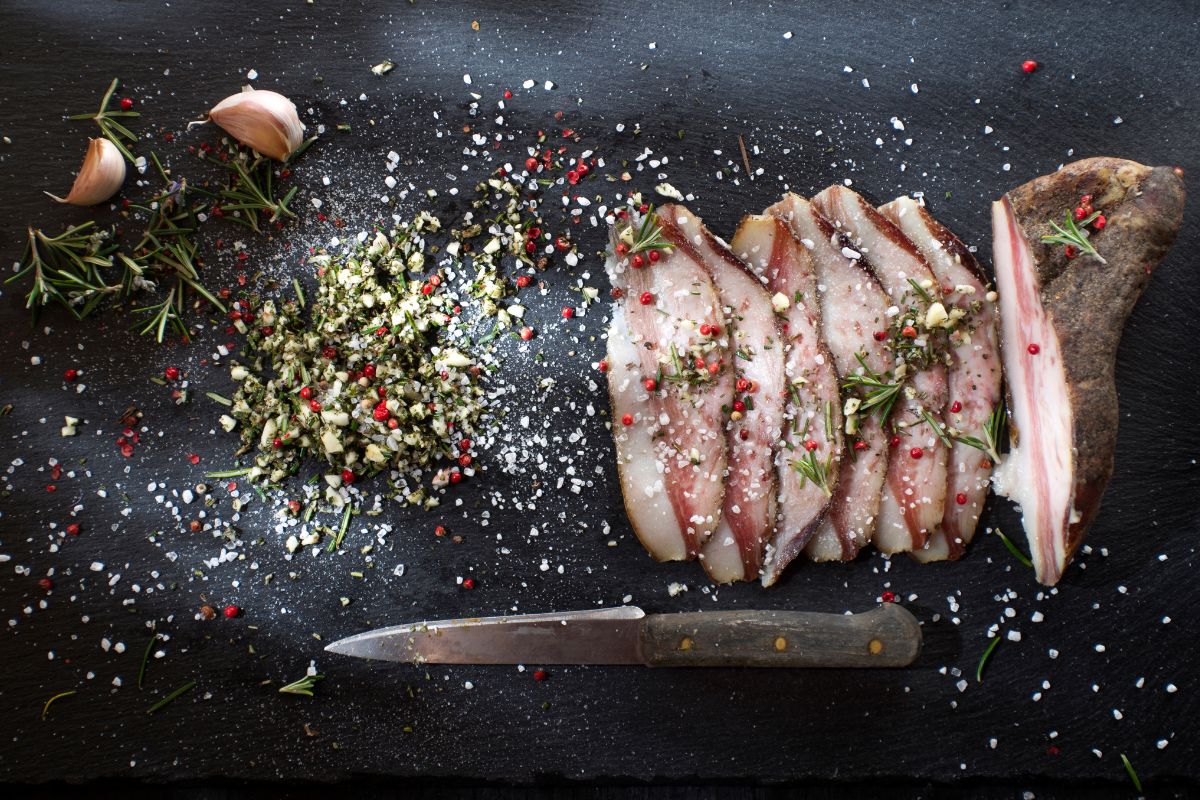
The guanciale is the great undisputed protagonist of Amatriciana, Carbonara and Gricia.
Let’s know it better!
Origins
The guanciale is typical of central Italy, especially from Abruzzo and Lazio. It was produced for the first time in the area between Amatrice and Campotosto lake, in the province of L’Aquila. However, Amatrice, which now belongs to the Lazio region, until 1927 was part of the province of L’Aquila in Abruzzo.
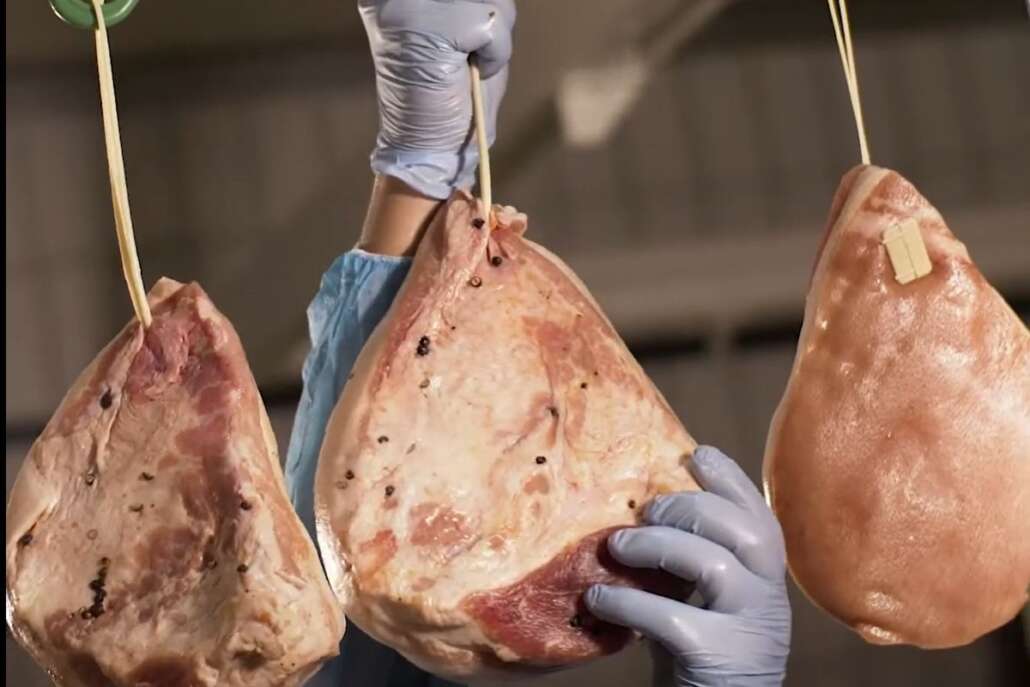
Guanciale is one of the fundamental ingredients of Roman cuisine.
This particular cut of meat has less urban origins and is decidedly more linked to sheep farming. Guanciale is the cheek and part of the neck of the pig. The idea of using it as a cured meat came from the shepherds who lived in the Monti della Laga, a mountain range that involves three regions: Lazio, Abruzzo and Marche. So we can say that the guanciale was born as a requirement of the shepherds. In this way they could count on a tasty food that could last for long periods without spoiling. It became the essential ingredient for the famous Amatriciana sauce around the 18th century. This pasta sauce, so famous in Rome, was born in Amatrice, a city that in the past belonged to Abruzzo region and which since 1927 belongs to Lazio region.
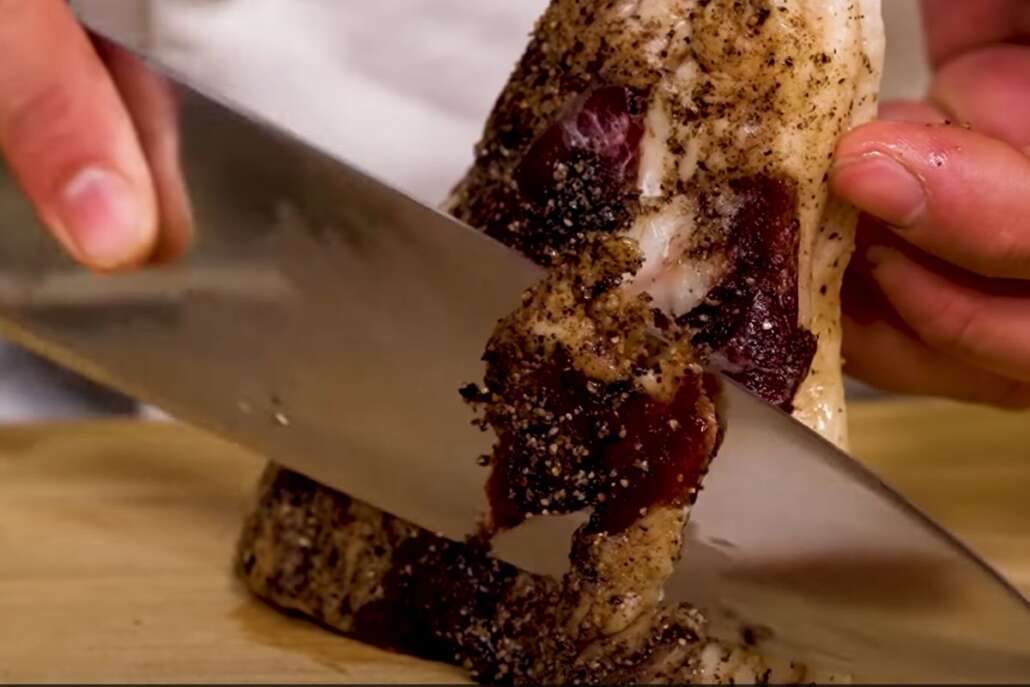
The difference between guanciale (pork cheek) , pancetta (pork belly) and bacon.
Guanciale as a name, derives from guancia, the Italian word for cheek. Its uniqueness lies in the cut of the meat, guancia indeed. The external season for the curing is salt, pepper, garlic, rosemary and sometimes, chilli. The meat ages for at least three months. In this period, it forms the hard crust that characterizes the outside. While the interior gains a very intense flavor. Differently from Guanciale, pancetta comes from the belly of the pork. The meat has salty seasoning maturing in a cool and dry place. The flavor comes from different spices depending on the producer style. Bacon instead, is a typical recipe from northern Europe and Italy. In Northern Europe the meat can be from belly and/or from the back. Generally, is cooked and cured later, then smoked. The use of a different kind of wood in the chimney, can influence the final taste a lot.
Guanciale and Bacon, the difference in the taste
Those are quite different. Firstly, guanciale is more tender than bacon, due, clearly, to the cut of the meat. Secondly, the flavor is stronger in the guanciale which requires an number of spices and herbs. The bacon, instead, offers more smokey aromas.

Food and religion? They are often related!
In Italy, on January 17th, we celebrate the day dedicated to Saint Anthony the Abbot. This Saint, according to Christian tradition, was the first of the abbots. It is said that he died as a hermit, among his animals and in his garden, at the age of 105. The Christian calendar remembers him as the patron saint of pigs, of the barns and butchers. It is no coincidence that, in iconography, he is always represented together with a pig. There are many stories that connect him to this animal. A first legend says that, while Antonio was traveling across the sea, a sow left a very sick piglet at his feet. The Saint healed him with prayers and from then on became his inseparable companion. To celebrate this Saint, the italians organize some special events such as liturgical masses. But also, animal blessings and agri-food festivals.
 When in Rome
 When in Rome
You can easily find guanciale in every grocery and butcher shops of the Capital. Indeed, this is a irreplaceable ingredient in the local cuisine. Del maiale non si butta via niente! every part of the pork is good, so, no waste.
Good news! Guanciale is often cheaper than bacon or pancetta, probably because it is really typical in Rome only. In other words, No Roman chefs will ever use pancetta instead of guanciale. Amatriciana, Gricia, Carbonara, the most beloved pasta recipes in Rome, all need this meat.To say otherwise, especially to a Roman, is almost a blasphemy, a real heresy to prepare those dishes without the pork cheeks meat.
If you enjoyed our Food Tour, you’d probably remember that is one of the most important ingredients for the amatriciana and carbonara pasta style.