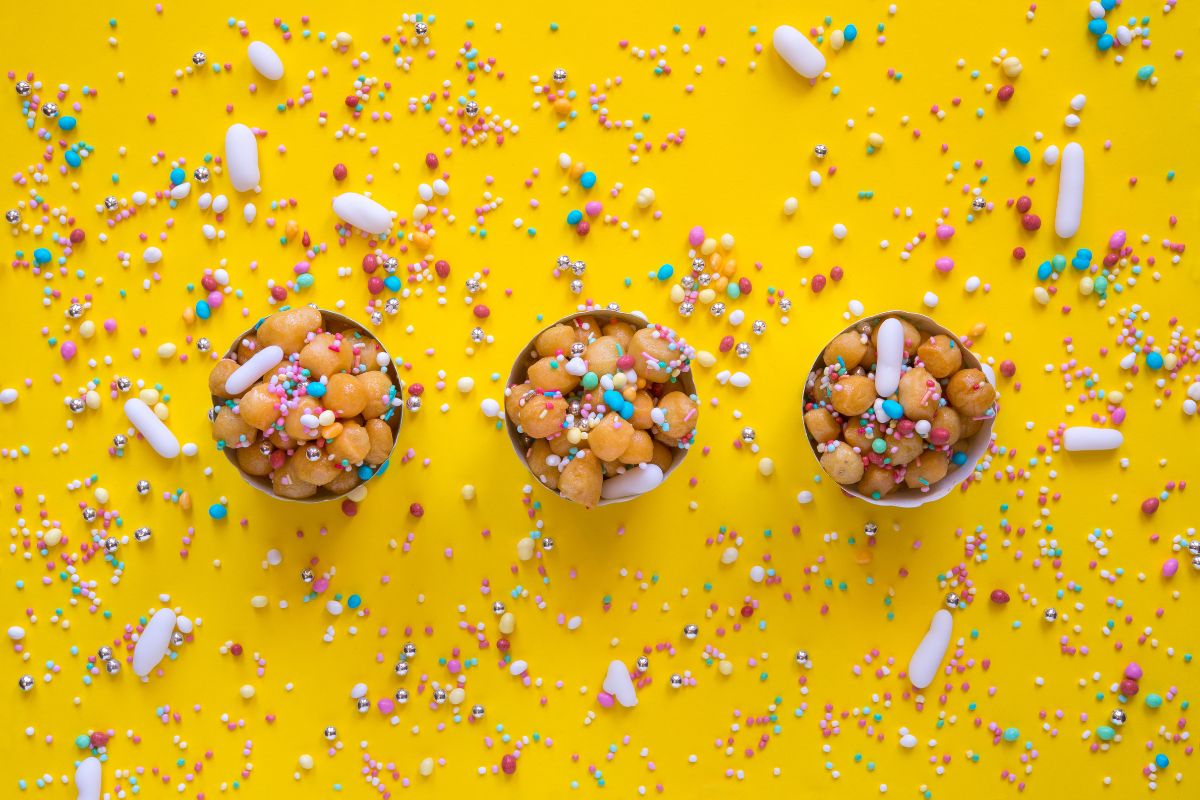
The three Italian Carnival sweets: Struffoli, Frappe and Castagnole.
Make way for delicacies and calories! At Carnival enjoy every typical sweet of this time of the year. Carnival is the perfect celebration for those with a sweet tooth!
In Italy, among the most loved, there are three in particular.
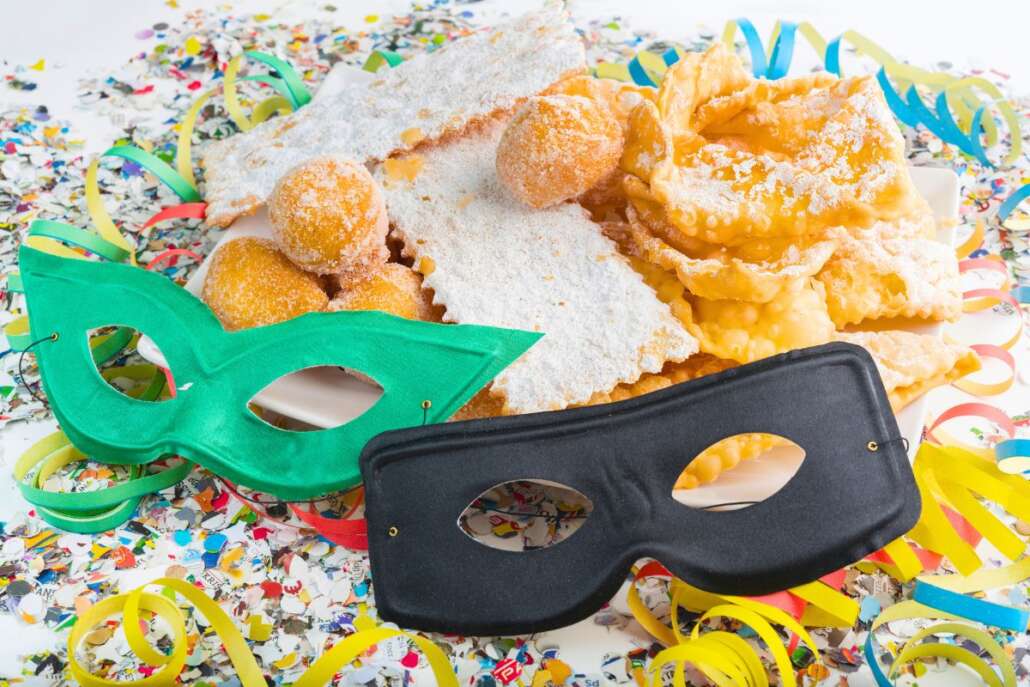
Carnival in Italy: abundance in the kitchen
Carnival represents the desire for pre-Lenten abundance. From the Latin carnem levare, meaning to eliminate meat, it gives an idea of how essential food is during this holiday. In fact, Shrove Tuesday is the last day of abundance before Lent, a period of fasting and abstinence in the Christian religion. Carnival derives from the pagan rites of Saturnalia, celebrated in December to say goodbye to winter and welcome spring. In the Middle Ages, the church put a limit to these extreme celebrations. They moved the Carnival celebrations closer to Easter, so as to interrupt it with the arrival of Lent, contrasting the season of binges and entertainment with the period of fasting and penance. Let’s see the three Italian Carnival sweets!
The three symbols of Carnival: Struffoli, Frappe and Castagnole
During this holiday, there are so many typical delights in the Italian culinary tradition. However, sugar reigns supreme in this part of the year. From north to south, since ancient times, countless recipes for tasty sweets to celebrate Carnival have been handed down. But there are three of these, in particular, that unite many Italian regions, despite the different names. The three Italian Carnival sweets are Struffoli, Frappe and Castagnole. Let’s discover together all the secrets of these three precious sweets of the Italian tradition.
Struffoli: an explosion of colors
These crunchy little balls from Naples, are fried in oil, stacked one on top of the other like a little mountain and sprinkled with plenty of honey, candied fruit and colored sugars, called diavulilli. The term probably comes from the Greek strongoulos, rounded. The origins are uncertain, but we know that they spread from convents as a gift to the most charitable families. The dough is simple: flour, eggs, sugar, butter and aniseed liqueur. In central Italy there is a similar sweet, called cicerchiata. Calabria and Sicily have the oldest variant, in a glazed or honey version: the pignolata. The Struffolo must be strictly small to be completely covered in honey, which is essential to keep them tied together. In fact, it is said that the more the small balls are tied together the greater the unity of the family that prepares them.

Frappe: the symbol of Carnival
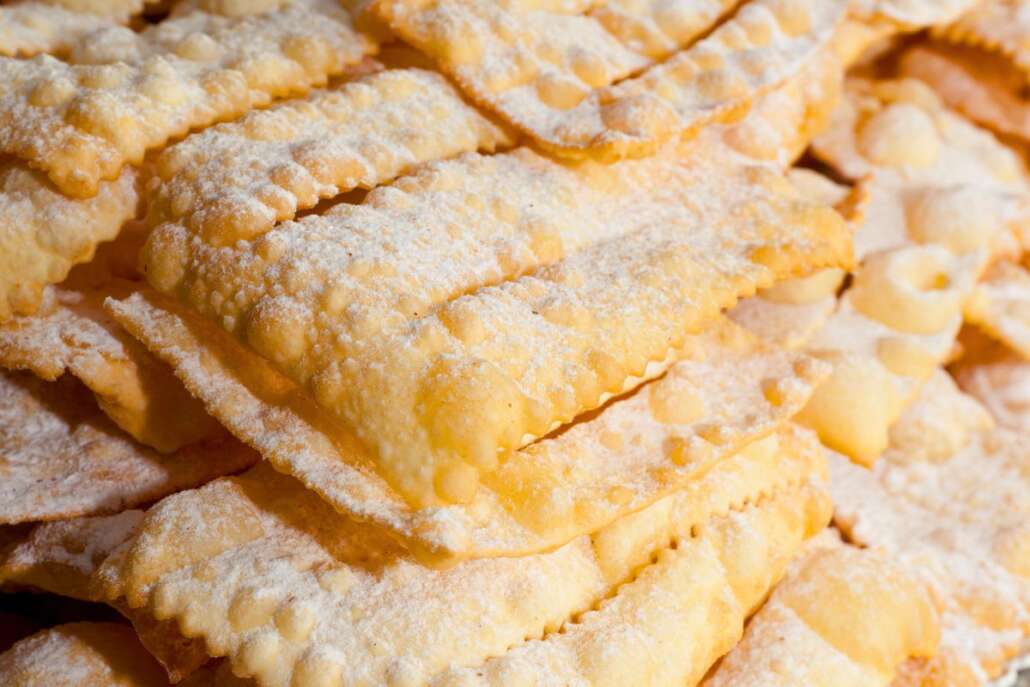
Mainly known as Chiacchiere, in Rome it’s Frappe. The origin seems to date back to the roman Saturnalia, today’s Carnival, when they distributed among the crowd the frictilia, sweets fried in pork fat and covered with honey. In the Middle Ages they served them during the Feast of fools. A thin sheet of pastry (flour, eggs and sugar) cut into strips, fried in lard and then covered in honey. The official recipe appears for the first time in 1560. In the late 1700s the dough was enriched with butter giving life to the recipe we know. Frappe are the perfect example of how a common heritage can be declined in different regional cuisines. Chiacchere or lattughe in Lombardy, Sfrappole in Emilia, Cenci in Tuscany and finally Crostoli in Trentino. Usually fried, we can also bake them, and cover them with icing sugar or with honey or dark chocolate.
Castagnole: an ancient Italian tradition
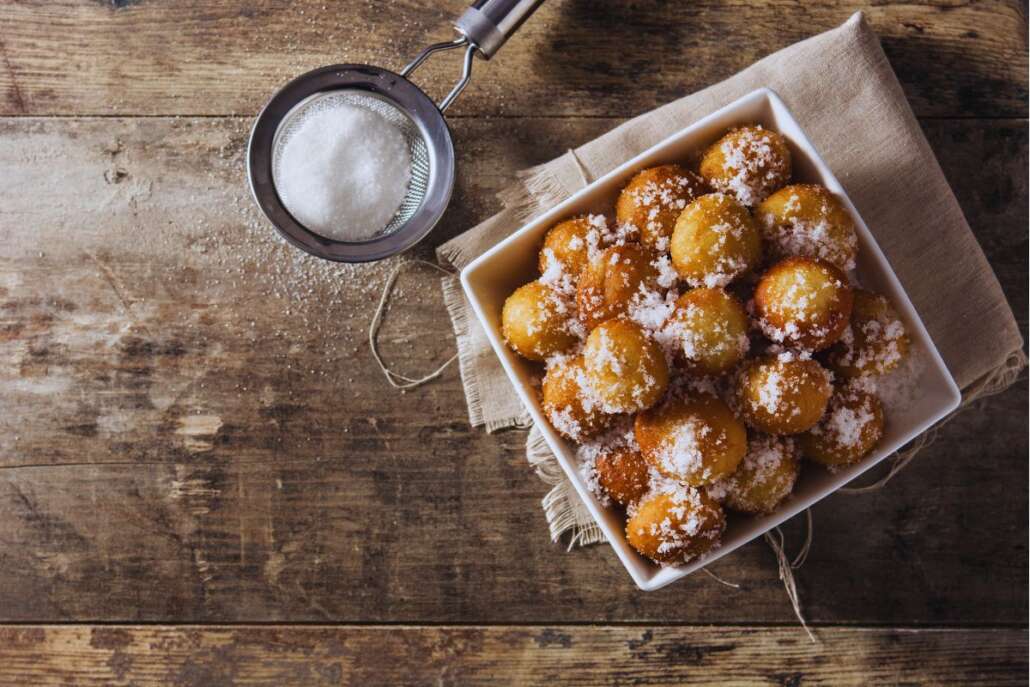
The name derives from the fruit of the chestnut tree. Castagnole appears for the first time in the recipe books of the 17th century, thanks to chef Latini, also personal chef of the Angevins family. This is a typical preparation not only of Romagna, but of several regions of Northern and Central Italy, such as Liguria, Veneto, Marche and Abruzzo. The recipe has remained almost unchanged over time. The dough is always fried in boiling oil and can be either plain or stuffed. With chocolate, ricotta, custard cream or jam. It’s usually covered with granulated sugar or orange honey. In central Italy they use liqueur to soak them, such as rum, alchermes or aniseed liqueur. The first evidence of this dessert dates back to the 17th century. In Rome, bakeries and pastry shops sell two variations: the plain ones, very similar to those found throughout Italy, and the stuffed ones.
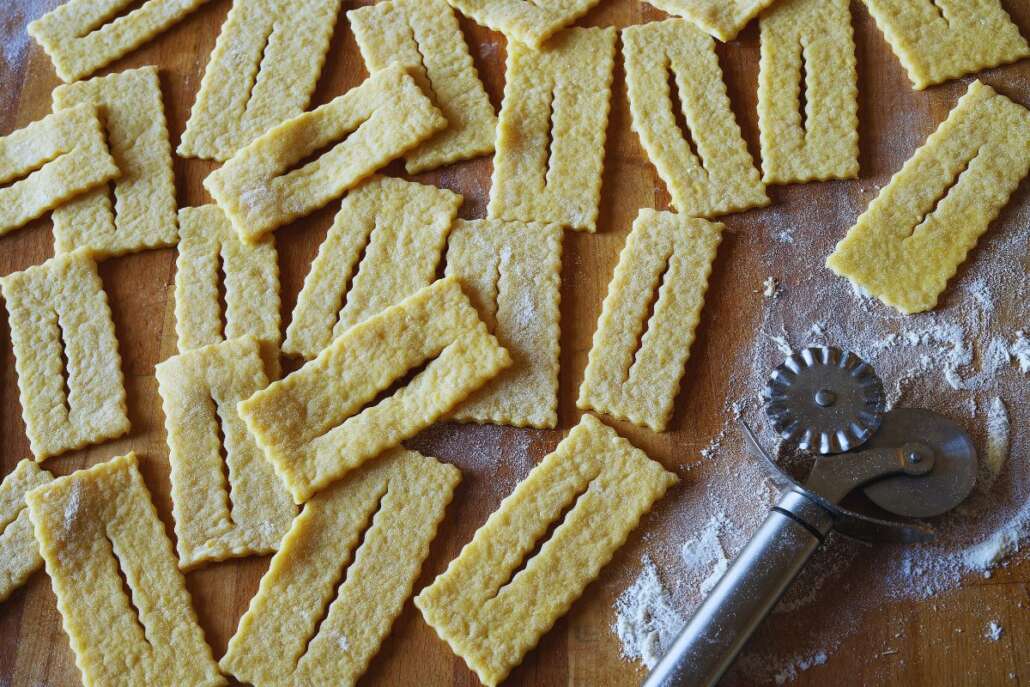
Here is our recipe for the Roman Frappe, one of the three Italian Carnival sweets
200 gr of flour
20 gr of butter
20 gr of sugar
2 whole eggs
2 tablespoons of liqueur
1 pinch of salt
Break the eggs, add the sugar and liqueur. Add the flour little by little and start kneading. Add the butter, the grated lemon peel, the salt and start mixing with your hands. Continue kneading on the floured work surface until you get a smooth and homogeneous dough. Cover it with cling film and let it rest for at least 30 minutes. Roll out the dough with a rolling pin to obtain a thin sheet. You can also use the pasta machine. Cut the dough into strips first on the short side and then on the long side, to obtain small rectangles. Let’s heat the oil for frying in a pan and try to put a piece of dough in it: if it comes back to the surface, the oil is ready. Let’s fry a couple of frappe at a time and turn them. When they are nice and golden, let’s place them on absorbent paper. Finally, sprinkle them with plenty of sugar.
Where to find the best frappe and castagnole in Rome
Let’s discover together where to buy two of the three Italian Carnival sweets: the best frappe and the best castagnole in the capital.
Pasticceria Grué (Viale Regina Margherita, 95)
Nero Vaniglia (Circonvallazione Ostiense, 201)
Casa Manfredi Teatro (Via dei Conciatori, 5)
Regoli Pasticceria (Via dello Statuto, 60)
Panella (Via Merulana, 54)
Antico Forno Roscioli (Via dei Chiavari, 16)
Pasticceria Walter Musco Bompiani (Largo Benedetto Bompiani, 8)
Forno Monteforte (Via del Pellegrino, 129)