Carnival: the craziest celebration of the year!
A paradise for those with a sweet tooth and for those who love to use their imagination.
Let the funniest and cheerful moment of the year begin! Every joke is worth it, they say… So get ready to feast! Fritters, chocolate and sweets. And as we know, in Italy, home of good food, we can be on the safe side.
 Carnival in ancient Rome:
 Carnival in ancient Rome:
Carnival is a celebration with very ancient roots. It was born in ancient Rome and it comes most likely from the pagan rites called Saturnalia, celebrated in December, to greet winter and welcome spring. During these celebrations, people indulged in the wildest entertainment, greed, binges and pranks. But above all it was the moment in which they could play by reversing roles, while waiting for the new year. The plebeian could pose as a noble, and vice versa. Basically, the key word of this moment of the year was chaos! This is why, in the Middle Ages, the church decided to put a limit on these inordinate celebrations. They moved the Carnival celebrations closer to Easter. So as to interrupt it with the arrival of Lent. In this way the season of binges and entertainment contrasted with the period of fasting and penance.
The most famous Carnival parties in Italy:
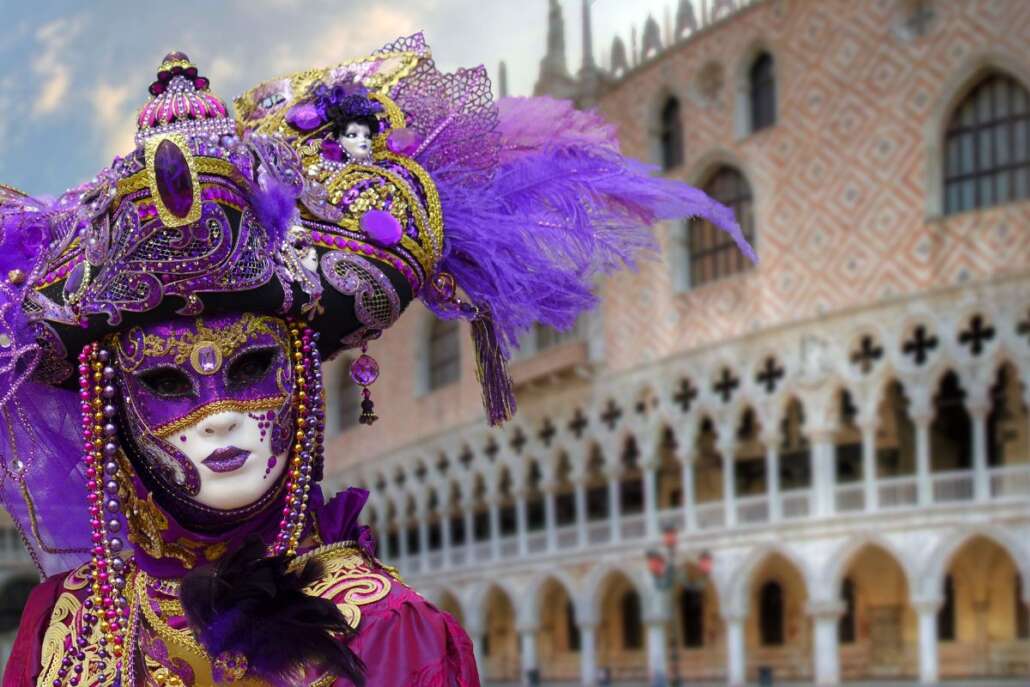 The most famous Carnival parties in Italy:
Italy is one of the countries that best expresses itself during Carnival. In addition to the very famous Venice Carnival, known throughout the world and famous for its amazing traditional masks, there are some less known but equally important ones. For example, the Ivrea Carnival. It’s famous for the merciless battle of the oranges, which simulates the conflict between nobility and plebs. The Carnival of Cento, in Emilia Romagna region, is famous for the so-called gettito, that is the throwing of balloons and stuffed animals from the parade floats. Speaking of carnival floats, the Viareggio Carnival is one of the most iconic. Instead, one of the oldest, dating back to 1300, is the Carnival of Fano, in the Marche region. It is famous for its delicacies, such as sweets and chocolates. And it is full of street foods vendors as well.
Fried is better!
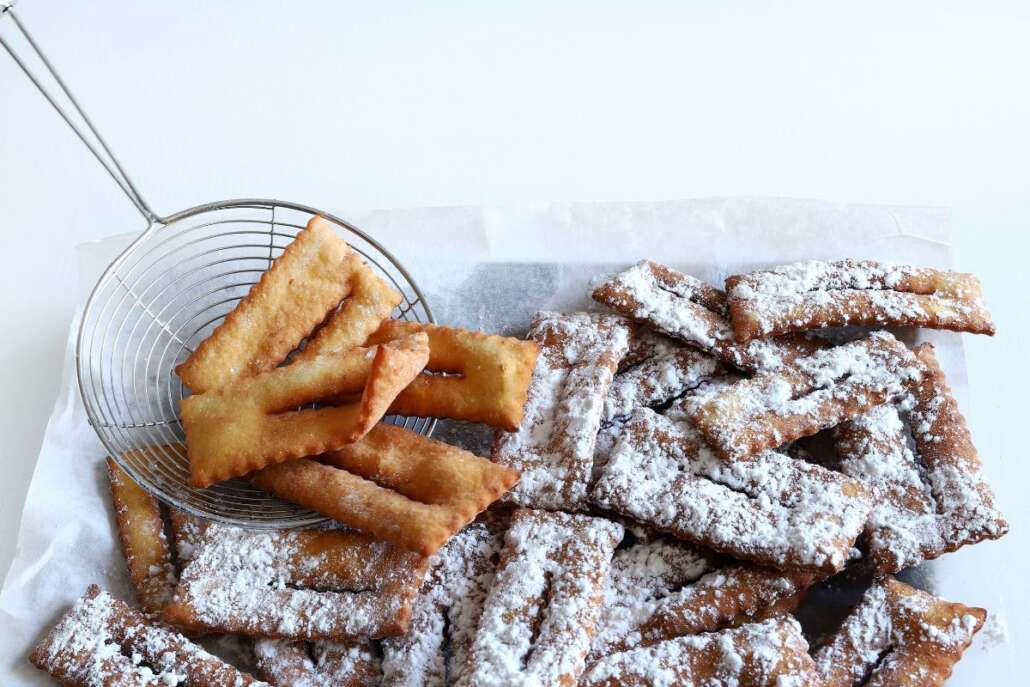 Fried is better!
The most important day of the Carnival celebrations is Shrove Tuesday, Mardi Gras, when people used to feast as much as they could in anticipation of the arrival of Lent. In fact, for the population, Carnival represented the period of excesses. So is today! And what’s tastier and more excessive than a nice fried treat? In fact, in Italy, tradition includes an incredible variety of fried desserts and each region has its own. Let’s see together:
–Chiacchiere (also called Frappe) are the symbol of Carnival. It is a dough made of flour, butter and sugar, then cut into stripes and fried. Frappe can also be flavored with Marsala, or orange blossom water, or covered with honey, or icing sugar or even chocolate.
–Castagnole (also called Tortelli) is also a symbol of Carnival. These are rounded fritters, flavored with vanilla, lemon zest and grappa, or rum. They are then fried and dipped in sugar. They can also be filled with custard or chocolate. In northern Italy they are known as sweet ravioli and are filled with jam, or ricotta cheese and dried fruit.
Each Italian region celebrates differently:
 Each Italian
 –Sanguinaccio
is a typical dessert from the Campania region. The name comes from sangue, that means blood. It is called like this because traditionally strained pig’s blood was used. Today the one with only melted dark chocolate is more common, but in Naples you can still find the original. Usually in Italy pigs were killed between January and February (Sant’Antonio Abate day). For this reason people used this meat especially in Carnival season. Since nothing from the pig is thrown away, it’s said, blood was used for this dessert thanks to its nutritional properties. The main characteristic of Sanguinaccio, with blood or not, is its aromas: cinnamon, vanilla or other spices. The ingredients are: sugar, cocoa, flour, mulled wine or milk, chocolate, dried fruits and nuts.
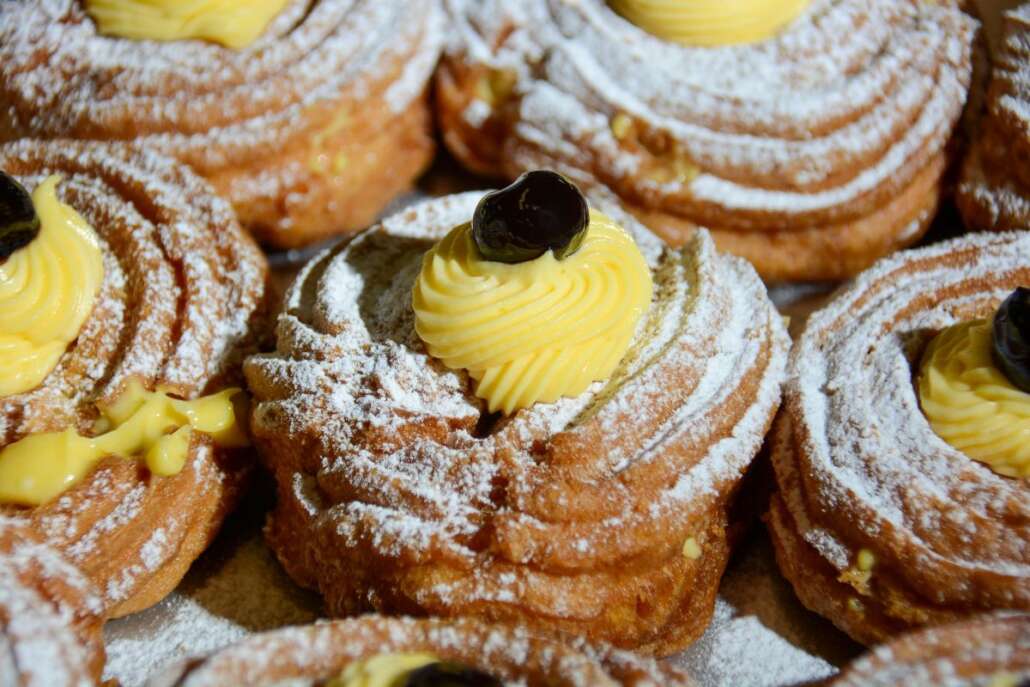
–Zeppole di San Giuseppe
are typical desserts of the Neapolitan tradition. However they have their roots in ancient Rome, when they were had no filling, like scones. Zeppole, also called bignè, are typical of both the Carnival period and Father’s Day, which is celebrated on St. Joseph’s Day, March 19th. Usually fried and filled with custard and black cherries on top.
–Cicerchiata
is a typical dessert from central Italy. These are fried small balls of a dough covered with honey, very similar to the most famous Neapolitan struffoli. Traditionally fried in lard, today they are found fried in oil or baked in the oven.
As the popular proverb says, at Carnival every joke is worth it, but even a few extra kilos is not a big deal!
Let’s delight our palates with all these goodies and let’s put on a corner the weighing scale for a moment… after all… It’s Carnival!