Traditional Balsamic Vinegar DOP from Modena and Reggio Emilia is an Italian excellence.
Everyone knows it, but not everyone knows how it is produced. It is even harder to understand why there is such a large difference in price.
If you want to discover more, you cannot miss this article about one of the most beloved and sought-after condiments in the world. It’s easy to say balsamic vinegar. Vinegar can have great detoxifying properties as well as a true elixir of health and youth. Even if that were not the case, we could still be comforted by its magnificent taste. First of all, vinegar comes from grapes—and what better country than Italy could host this magical transformation? Vinegar is used as a condiment, but also as a disinfectant, ingredient to balance sauces that are too rich. Vinegar gives life to dishes that might otherwise taste a bit dull. Needless to say, Italy is the world’s number-one producer of vinegar, yet—like many other products—it is also among the smaller consumers.

There are many vinegars, but some are truly special
The first fundamental distinction is between Balsamic Vinegar of Modena (often flavored or industrial) and Traditional Balsamic Vinegar. Traditional balsamic vinegar, however, is obtained from grape must during the first stage of fermentation. Here we are talking only about the most precious type of vinegar. Since 2000, both Traditional Balsamic Vinegar of Modena and Traditional Balsamic Vinegar of Reggio Emilia have been protected by the DOP (Protected Designation of Origin) label. Both are produced from cooked grape must that is then aged for at least 12 years in wooden barrels. For the designation “Extravecchio”, the aging must last at least 25 years.
 Traditional balsamic vinegar: another magic of wood and time
The barrels must be of different sizes and made from different types of wood to host, year after year, the transfer of the fermented must. Each year, as part of the vinegar evaporates and the volume decreases, the liquid is moved to another barrel. Because each barrel is made from a different wood, it contributes different aromas, colors, and flavors to the product. Year after year the vinegar becomes denser and more viscous, but also richer in aroma and taste. Imagine all these small barrels lying in the attics of Emilia and Romagna: cherry, oak, chestnut, mulberry, ash, and juniper barrels working together for us. Along with time and seasonal temperature changes, they almost magically create the most regal of vinegars. With aging, the must becomes darker, while on the palate it is sumptuous, sweet-and-sour, and extremely persistent.
 A historical heritage: the story of balsamic vinegar
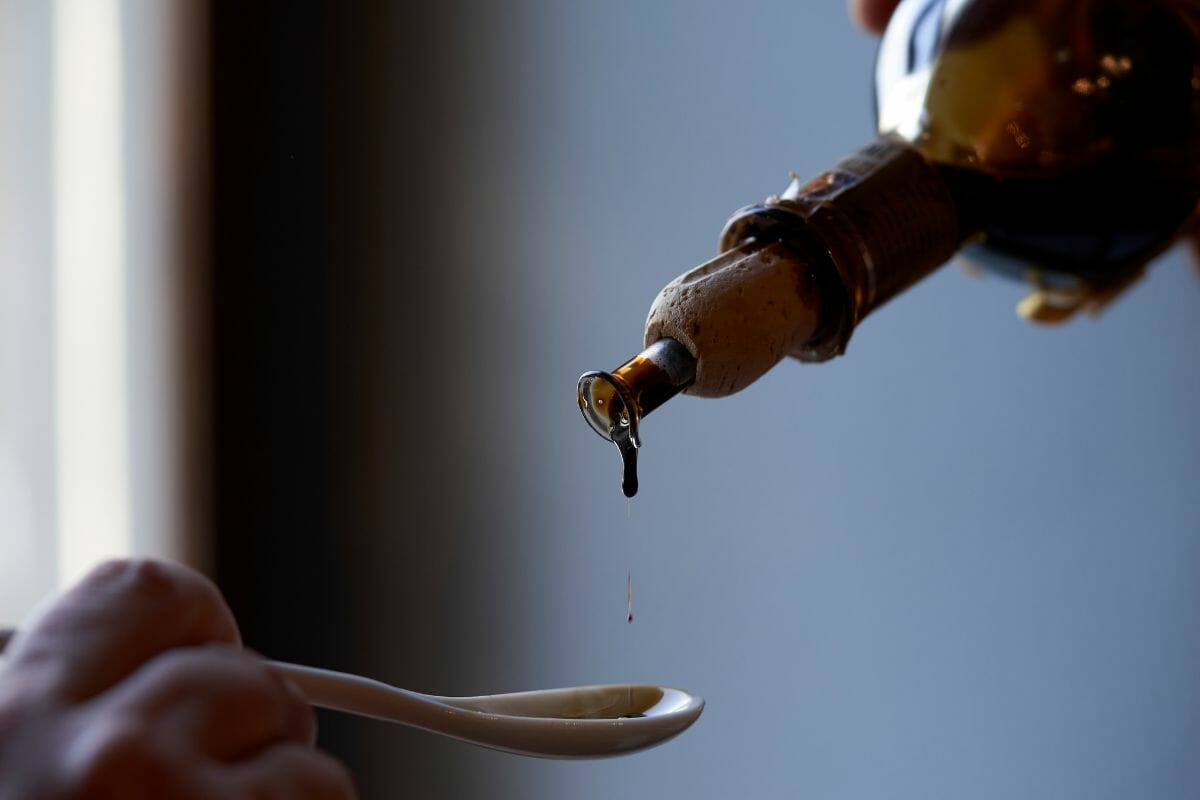
This is an ancient tradition that dates back centuries. It was highly appreciated by the nobility, who passed down its secrets and recipes from generation to generation. During the Renaissance this vinegar achieved incredible success, even internationally. vingar was so valuable that it became part of the dowry of wealthy brides. Considered a balsam, meaning a medicinal remedy—essential in every household. The true Traditional Balsamic Vinegar of Modena is still considered today, as it was then, an elixir of long life and a delight for the palate. But it is also very expensive. This is not a vinegar for dressing salads. You will never find it in spray bottles, and an authentic traditional balsamic vinegar will never cost less than around €100 for a small bottle.
 How traditional balsamic vinegar from Modena is produced
The grapes are pressed to obtain the must, which is placed in vats. After a period that allows the grape skins to rise to the surface, it is filtered and slowly cooked. Once the must has been cooked for about 14 hours, it is left to rest until spring. With the rise in temperature during spring, fermentation begins again, transforming sugars into alcohol. When the alcohol reaches about 6–7 degrees, the process continues with the action of acetobacter, which turns the alcohol into vinegar.
At this point the liquid is transferred into small barrels. There must be at least three, though usually many more are used. In the first year the must ages in a chestnut barrel, which begins to give it a darker color. Then it moves to cherry wood, which provides sweeter notes, and so on—each type of wood contributes different characteristics. Every year the “rincalzo” process is performed: new must is added to the first barrel and gradually transferred through the others to maintain continuous production. The final barrel, usually made of oak, holds about 10 liters.
 Approval by the Consortium: a very strict test
 Approval by the Consortium: a very strict test
After all those years, very little vinegar remains due to evaporation. A producer may have waited 12 years for this precious nectar. But the process is not over. The producer must pass the examination of a panel of experts from the Consortium. They decide whether the vinegar deserves the label as Traditional Balsamic Vinegar of Modena or Reggio Emilia DOP. The term Traditional can only be granted by the Consortium. The bottle contains only 100 ml of vinegar and has a unique, unmistakable shape. The designer of the vinegar bottle is a star: the architect Giorgetto Giugiaro. If the vinegar does not pass the sensory test, it cannot receive the official label. Although it may still be sold—under a different name, downgraded, good but not exceptional.
So what are all the other balsamic vinegars?
If the label does not carry the Consortium seal and the Giugiaro bottle, unfortunately we are not talking about traditional balsamic vinegar. Other vinegars without the “traditional” designation may still be decent products, but they are difficult to find in supermarkets. What you usually find there is often, unfortunately, a poor imitation—industrial products made with different processes and ingredients.
For example, because they are not aged in wood, their color is often light. To create a proper imitation, the producer adds caramel coloring. This makes the average vinegar more like condiments or sauces. They are popular, especially among those who have never tasted the real thing, partly because of the large amount of added sugar they often contain. Their price ranges from a few euros to a few dozen euros. But we are talking about a completely different playing field—another league, in fact another sport entirely.
Balsamic vinegar and food pairings
 Balsamic vinegar and food pairings
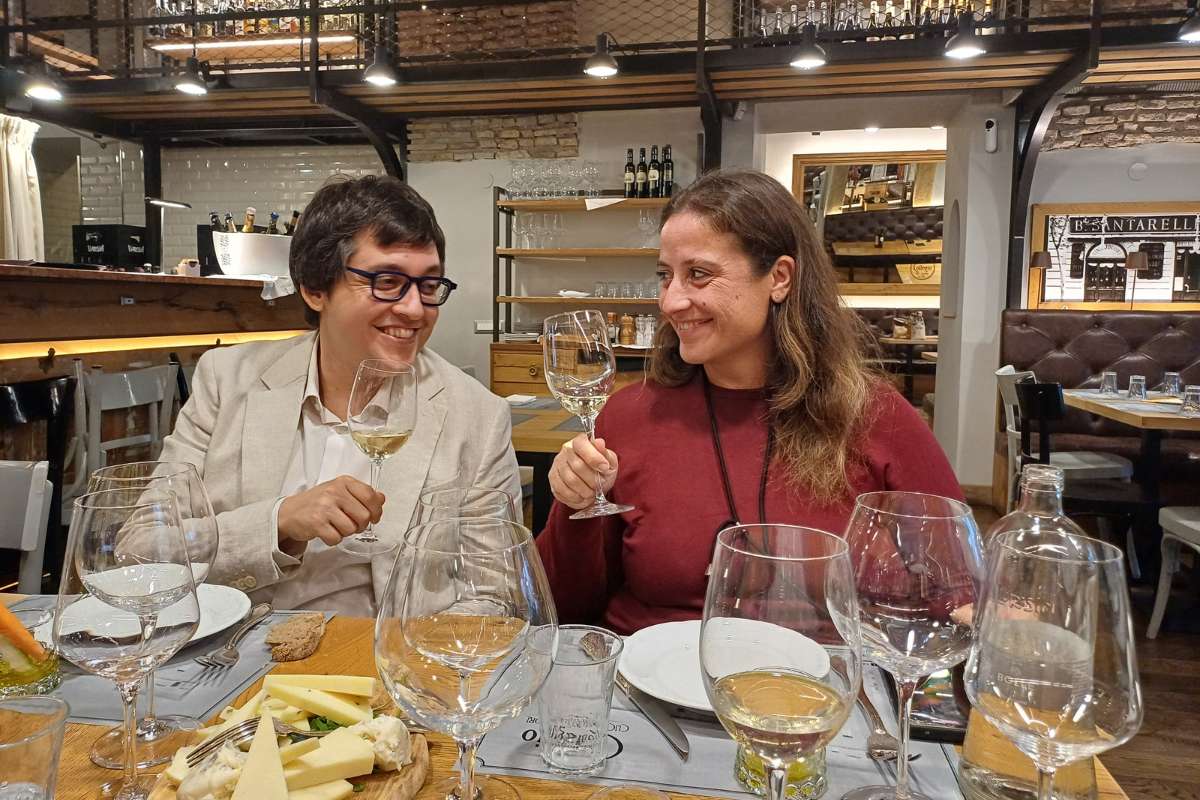
Just a few drops of balsamic vinegar can transform a dish and elevate its flavor. Wisdom and moderation are the keywords for balsamic. Unlike ordinary wine vinegar, balsamic vinegar pairs well with wine. It prefers soft, rounded wines that can accompany its characteristic sweetness. A classic pairing is balsamic vinegar with strawberries. It also works beautifully with saffron risotto, with the classic summer dish of figs and prosciutto, with recipes containing Parmigiano Reggiano, or on high-quality beef tartare.
In Rome it is very popular on straccetti with arugula and shaved Grana cheese, a quick and typical Roman dish. In winter it adds a chef’s touch to soups made with potatoes, pumpkin, or chickpeas.