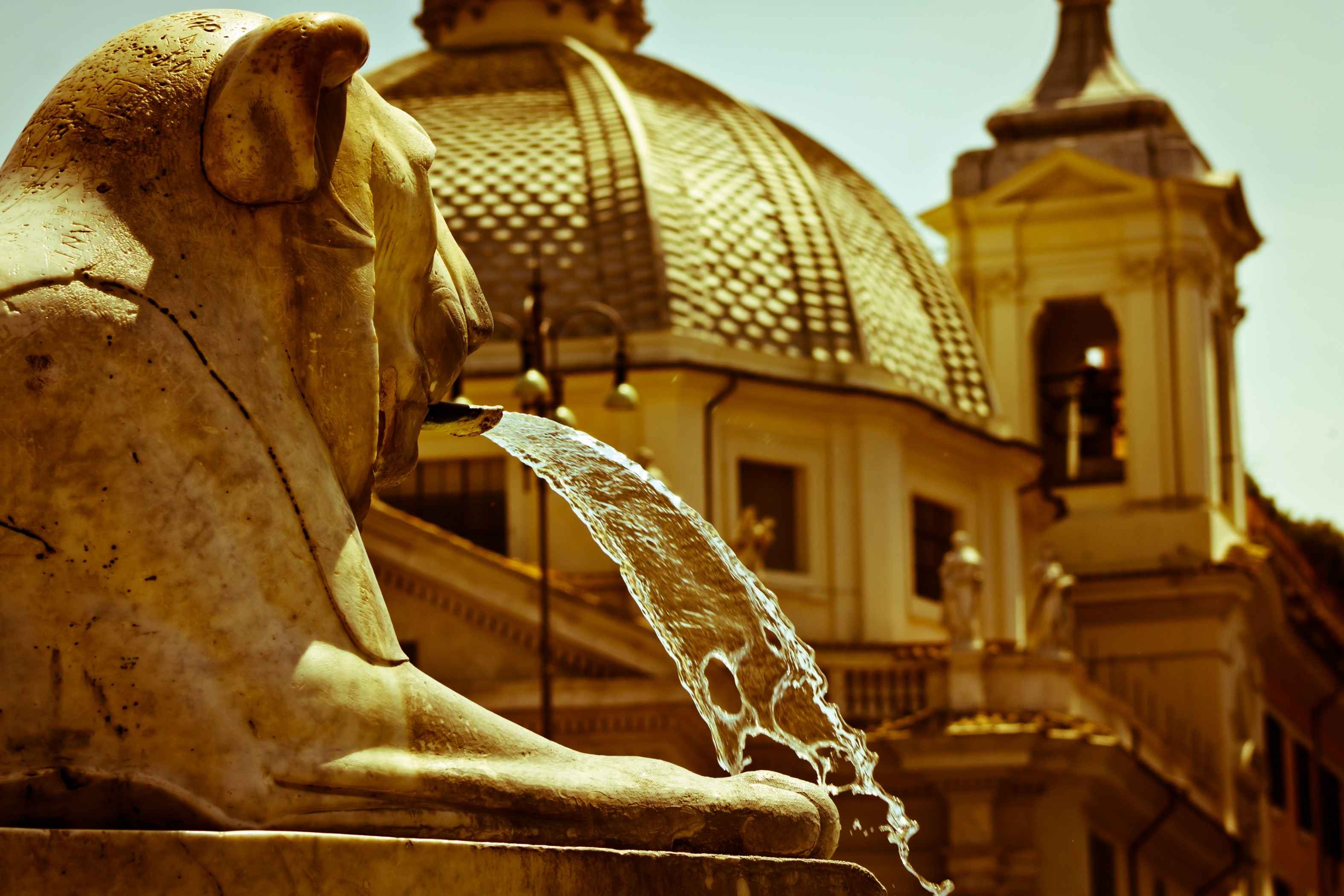
When you think of Rome it’s Colosseum, Carbonara and fountains!
Art and history literally flow from its fountains. Not just simple jets of water, but real open-air works of art. Some are masterpieces, others are more modest and certainly less known. Let’s discover the most curious fountains of Rome.
Fontana del mascherone (Mask’s fountain)
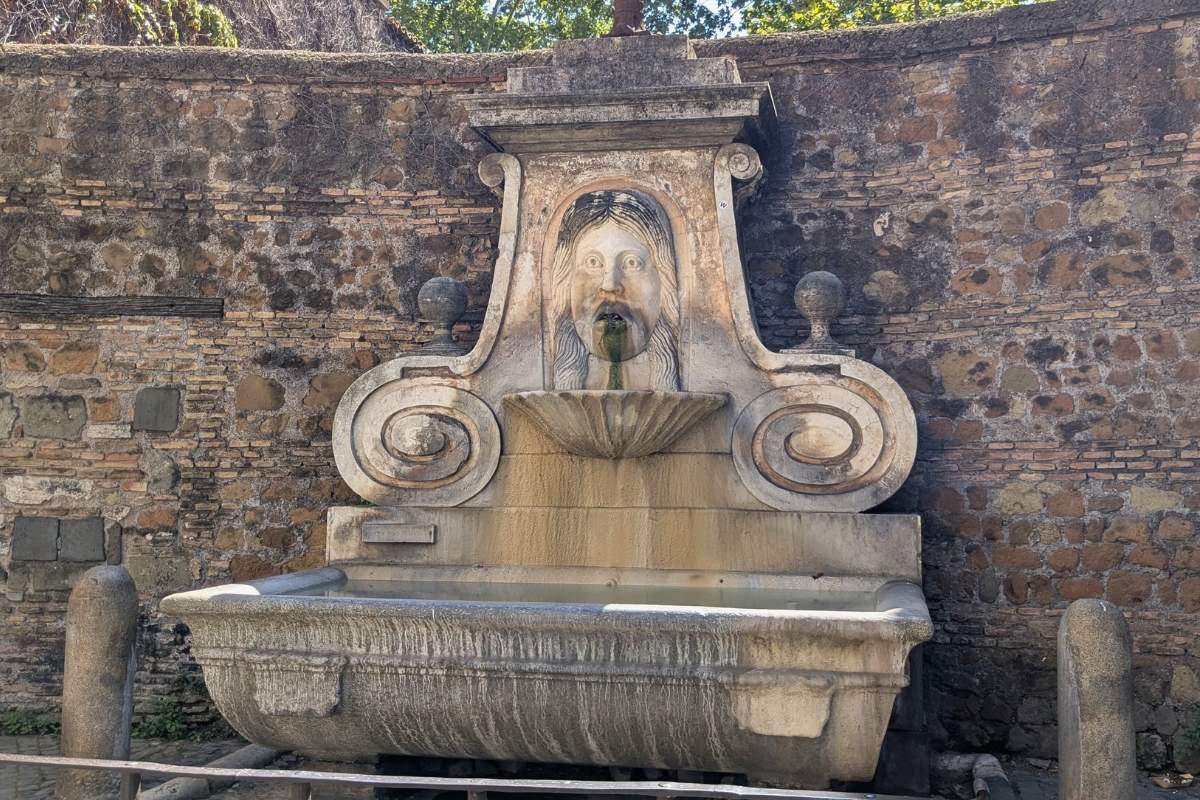
Located in Via Giulia, one of the most beautiful streets in Rome, this fountain takes its name from the big face carved in marble, from whose jaws crystalline water flows. It is a large Roman mask with wide eyes. Presumably designed by Girolamo Rinaldi in the second quarter of the 17th century. The lily at the top of the fountain was the heraldic symbol of the Farnese family. It was precisely this very powerful family, who lived in the building opposite, who paid for its construction. Initially, the fountain was located in the center of an open-air theater. Then, at the end of the 19th century, it was moved to where it is still located today. It is said that during some special events, exquisite wine would flow from the fountain. Thanks to the generosity of the Farnese family who wanted to cheer up their guests.
Fontana dei libri (Books’ fountain)
The Fountain of books represents the district in which it is located, the Sant’Eustachio district, in Via degli Staderari. In the past, the staderari were the sellers of scales and steelyards and here they had their shops. The fountain was built in 1927 by Pietro Lombardi, at the behest of the municipality of Rome. The municipality’s project was to recreate urban symbols of the various ancient Roman districts and of the disappeared professions. In addition to the deer, symbol of the district, the fountain also shows books leaning on shelves. This is for two reasons. First of all, the street was originally called Via dell’università. Secondly, the ancient books refer to the Ancient University of Sapienza, which was located right inside the building on which the fountain was built.
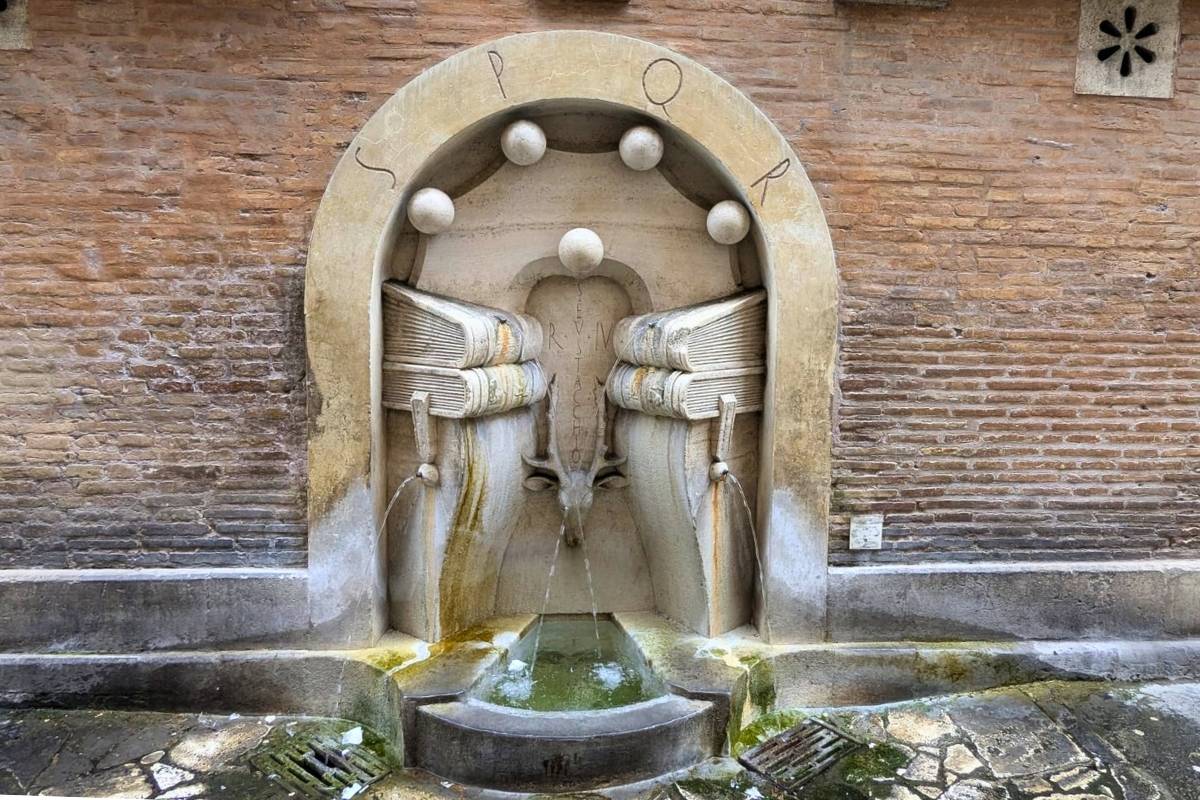
Fill your water bottle at this fountain during our Espresso and Gelato tour!
Fontana della terrina (Tureen’s fountain)
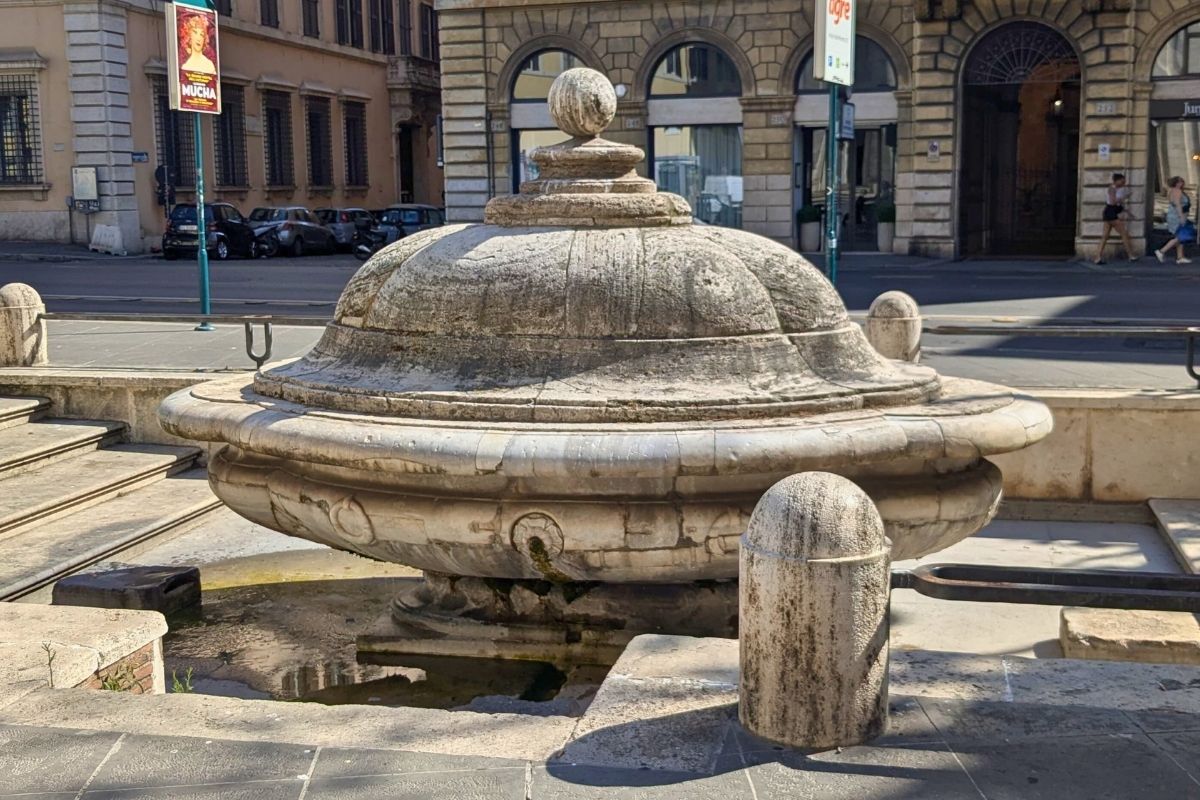
One of the funniest fountains. The Tureen’s fountain was actually the main fountain of the Campo de’ Fiori market. Sculpted by Giacomo della Porta and placed right where we see today the statue of Giordano Bruno. To place the statue of the scientist, in 1889, the fountain was moved. It wandered around the municipal warehouses until the 1920s. Then it finally found peace, because it was placed where it is still today, in Piazza della Chiesa Nuova. It seems that the lid of the basin was added at a later time. It is said that it was designed to prevent the fountain from turning into a garbage dump. In fact, being located originally in the Campo de’ Fiori market, it filled up every day with vegetable scraps and watermelons left to soak in water.
Fontana del Facchino (Water carrier’s fountain)
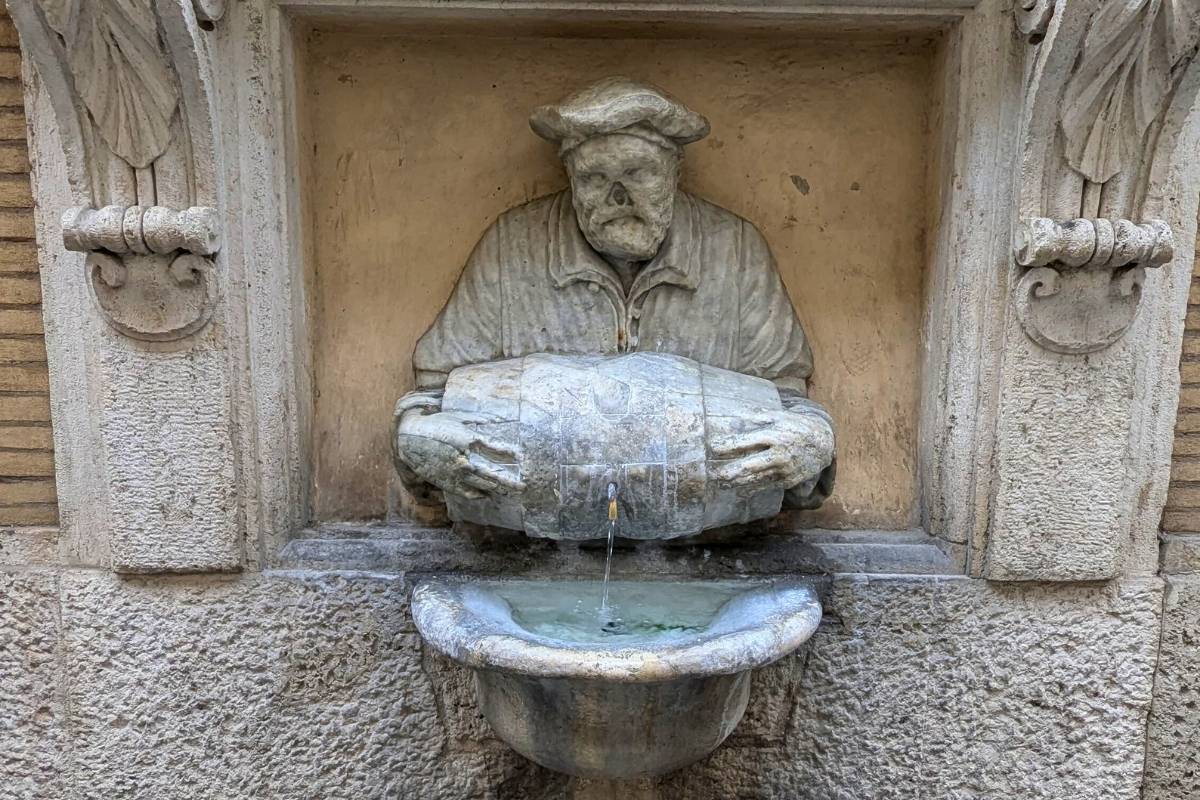
A rumor attributes this fountain to none other than Michelangelo. Small and humble, it releases water from the barrel held with difficulty by a water vendor bent over himself. It is one of the talking statues of Rome. Just like Pasquino. In fact, here the people posted signs of biting satire against the papal government. According to the legend the statue was inspired by the figure of a certain Abondio Rizio, a Roman water carrier who had the vice of hitting the bottle a little too much. The statue would be his eternal condemnation. That is, pouring water from a barrel of wine for eternity.
Fontana delle anfore (Amphorae’ fountain)
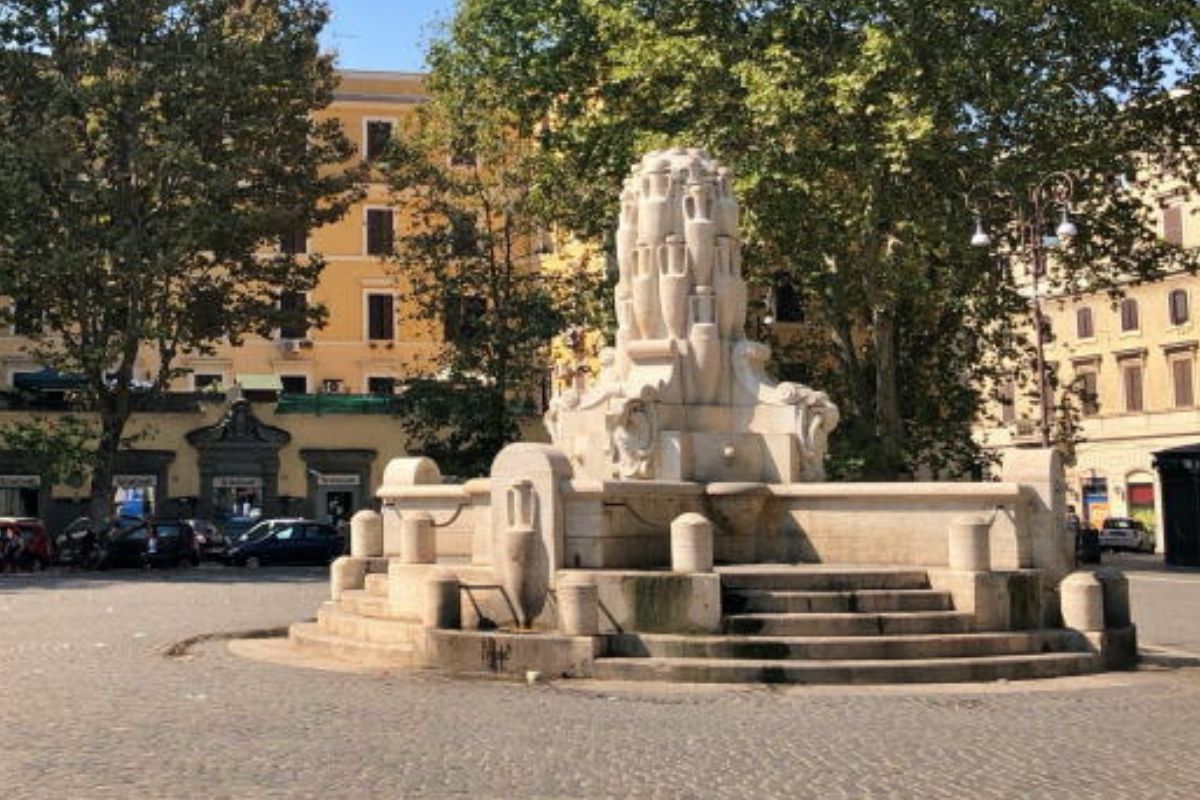
We are in Testaccio, one of the neighborhoods most loved by Romans. The name Testaccio comes from Mount Testaccio, an artificial hill that was created with the accumulation of shards and debris, in Latin testae. The shards belonged to ancient amphorae and vases accumulated over the centuries, since this area corresponded to the large landfill of the port of Ancient Rome, called Emporium. Hence the idea of the architect Pietro Lombardi and his fountain of amphorae. Inaugurated in 1926, today a fundamental part of the beautiful Piazza Testaccio. Entirely in travertine, it is made up of a set of amphorae that refer precisely to Mount Testaccio.
If you want to take a gastronomic tour with us and drink a sip of water from the Roman fountains, book one of our food tours!