What is Easter without our beloved Colomba?
The Italian Easter bread is the counterpart of the two well-known Italian Christmas desserts, panettone and pandoro.
Let’s discover together origins and characteristics of this soft and fragrant cake.The Easter Dove and its meaning
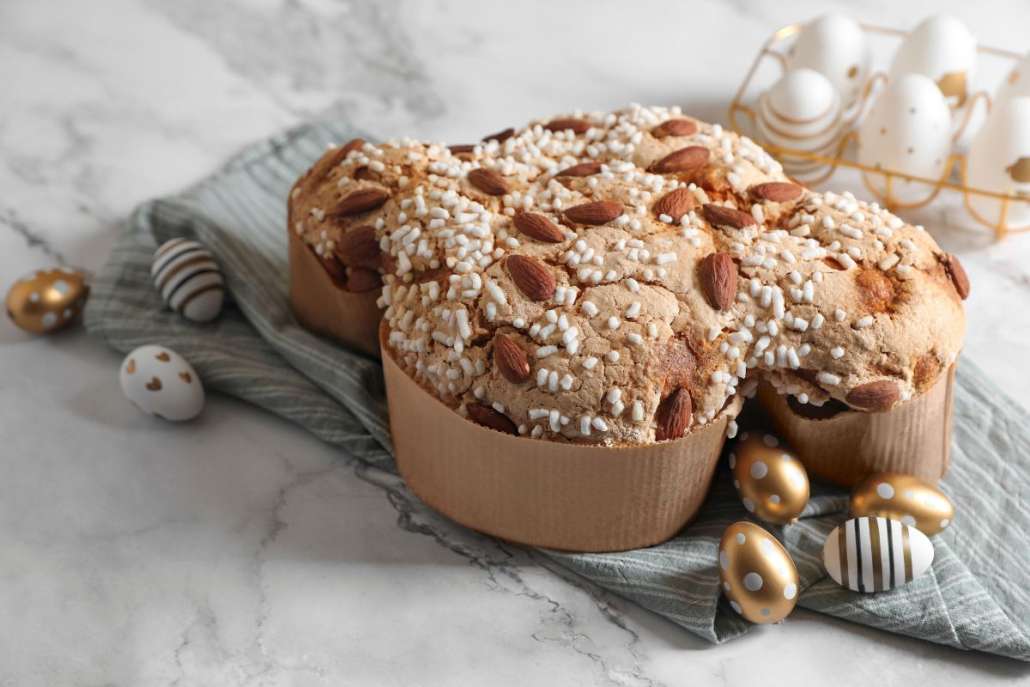
The Italian Easter bread is certainly one of the most symbolical desserts in the Italian tradition. Obviously it embodies love and peace. In fact, already in Genesis, the end of the divine punishment, represented by the universal flood, marks the return to Noah of the white dove with the olive branch. In fact, the shape of the Easter cake reminds a dove. It has become the symbol par excellence of the festivity to celebrate the Resurrection of Jesus Christ. It’s the passage to a new life for Christians, freed from sin. The Easter Dove bread goes together with the Easter Egg, again a symbol of Resurrection.
Where does the Easter Dove originate?
As with many other sweets or dishes of the Italian culinary tradition, the Easter bread does not have clear and defined origins. In fact, there are several stories that contribute to being the original. We think that the Colomba has Lombard origins. In 572 AD the Lombard king Alboin conquered the city of Pavia. The citizens, to ingratiate themselves with the barbarians, gave them soft dove-shaped sweets, as a sign of peace. A more romantic legend says that this cake is linked to Saint Columbanus. In 610, again in Pavia, Queen Teodolinda invited the saint to a sumptuous banquet with abundant game. In order not to offend the queen, the saint offered to bless the meat and make it suitable for the period of Lent. With a miracle, he transformed the game into soft and delicious Easter dove breads.

Easter Dove bread today
From the information we gather, it seems that Colomba is a dessert of Lombard origins. But Veneto also claims its paternity, in particular the city of Verona. However, we know for sure that the first Italian Easter bread was born in the 1930s in Milan. Dino Villani, the advertising director of Motta, had the idea of producing a new dessert with the same machinery used to produce Panettone. In this way, the brand’s work increased without limitation to the Christmas season. He chose the Dove as a symbol, applying it to the Easter holiday and the spring season. From there, many other producers followed in Motta’s footsteps. First of all, Vergani, another popular Lombard brand.
The characteristics of the Easter Colomba
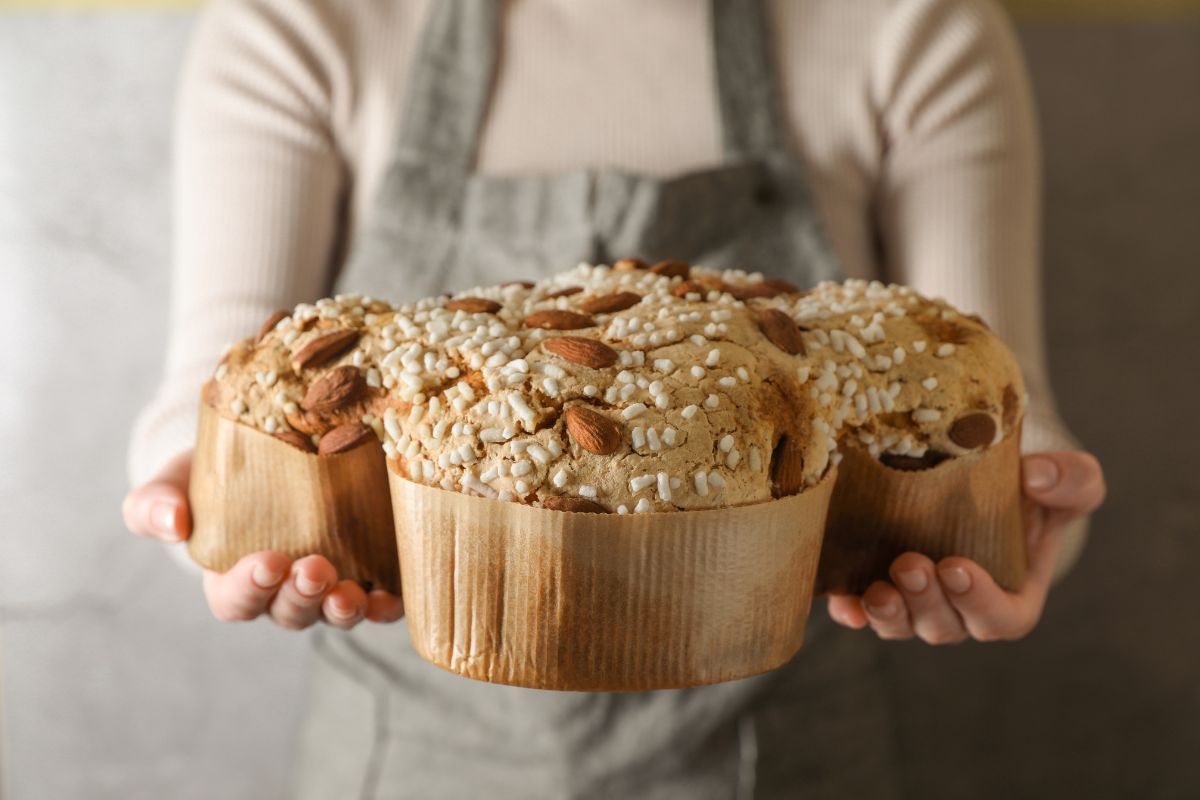
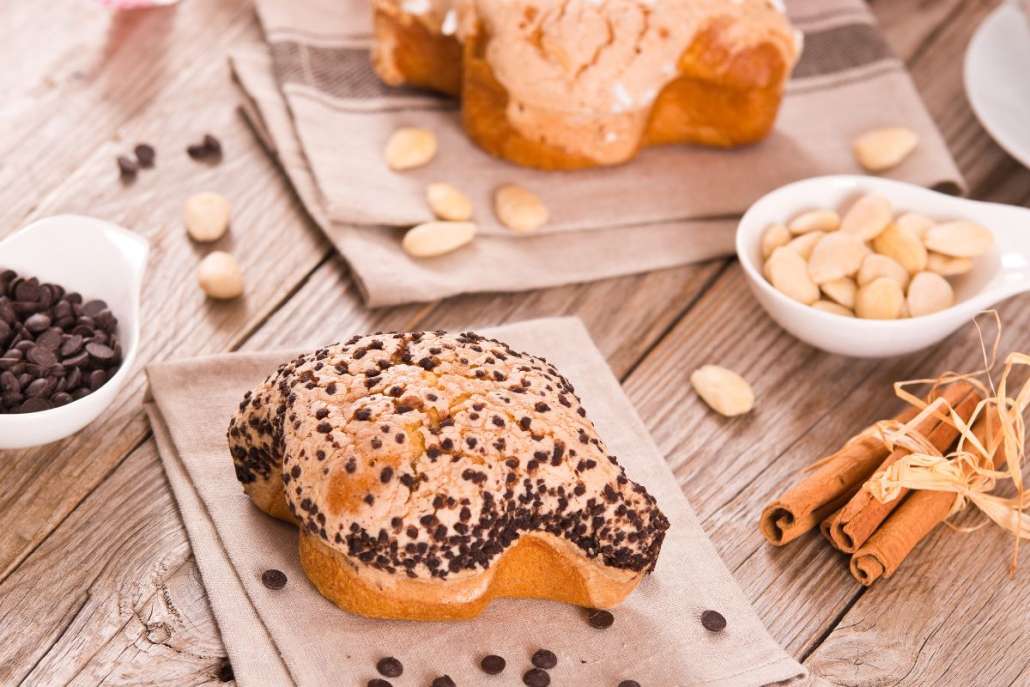
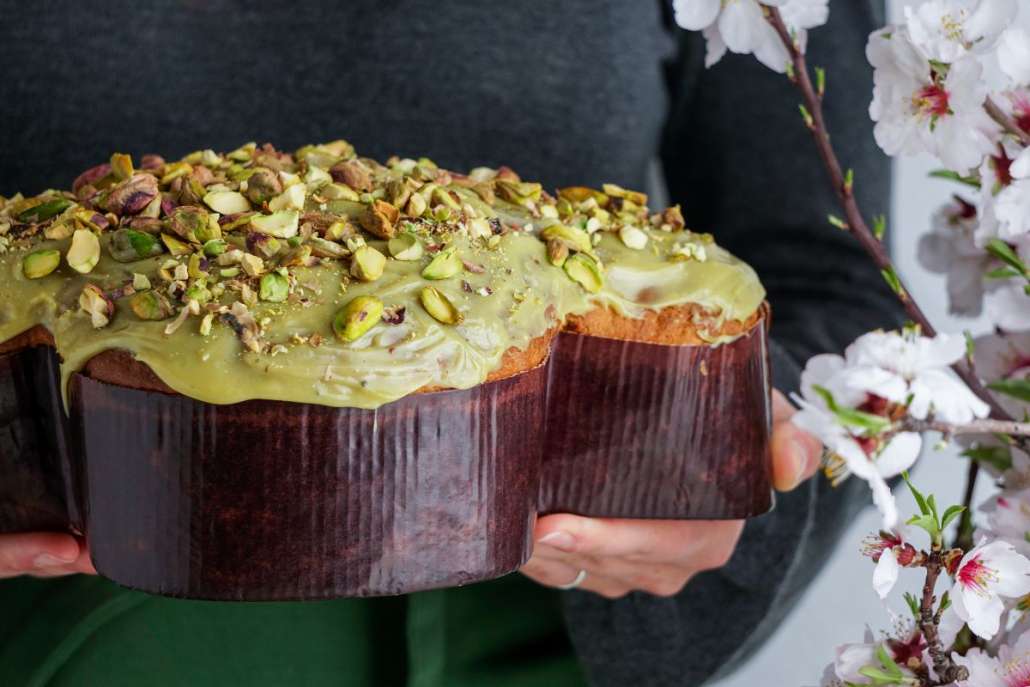
The dough of the Easter Colomba is very similar to that of the Panettone, the king of Christmas desserts. It is made with three different doughs with three different leavening times, for a total of 48 hours of waiting. The basic ingredients are sugar, flour, water, milk, sourdough and butter. Finally, raisins, eggs, salt, candied oranges, vanilla and more sugar are added and it is left to rise for the last time, for at least 16 hours. When the dough has risen well, it is placed in the Colomba-shaped mold and covered with a glaze made of flour, corn starch, egg white, sugar, almonds and sometimes hazelnuts. The garnish is finished with whole almonds and granulated sugar and then it is baked. Obviously, today you can find many variations, even imaginative ones. The chocolate Colomba, the pistachio one or the apricot and dark chocolate one.
The Veronese version of the Easter Colomba
There is also a version of the Colomba in Veneto region. In fact, it is a variant of the fugassa, a popular sweet bread from Verona, but with the dove shape. According to the story this leavened cake was present in the bakeries of Verona already in the nineteenth century. The original recipe is similar to the Milanese one, with the addition of cocoa butter. Soft, delicate and elastic with long leavening and slow cooking. Also for this fantastic cake the icing with almonds and granulated sugar is a must.
The best Colomba in Italy 2025
The national championship Best Colomba in Italy was held again this year. The International Federation of Pastry, Gelato and Chocolate organized this championship to award two different categories: the classic Colomba and the innovative Colomba. 100 competing Colombas proposed by pastry chefs from every Italian region. The award for the best classic Colomba went to Luigi Barbagallo. A pastry chef from San Mango D’aquino (Calabria region) brought a recipe with a perfect aroma of citrus and vanilla. For the innovative category, the award went to Roberto Moreschi from Chiavenna (Lombardy region) with his coffee and lemon chocolate Colomba.
How to find the best Easter Colomba bread (in Rome!)
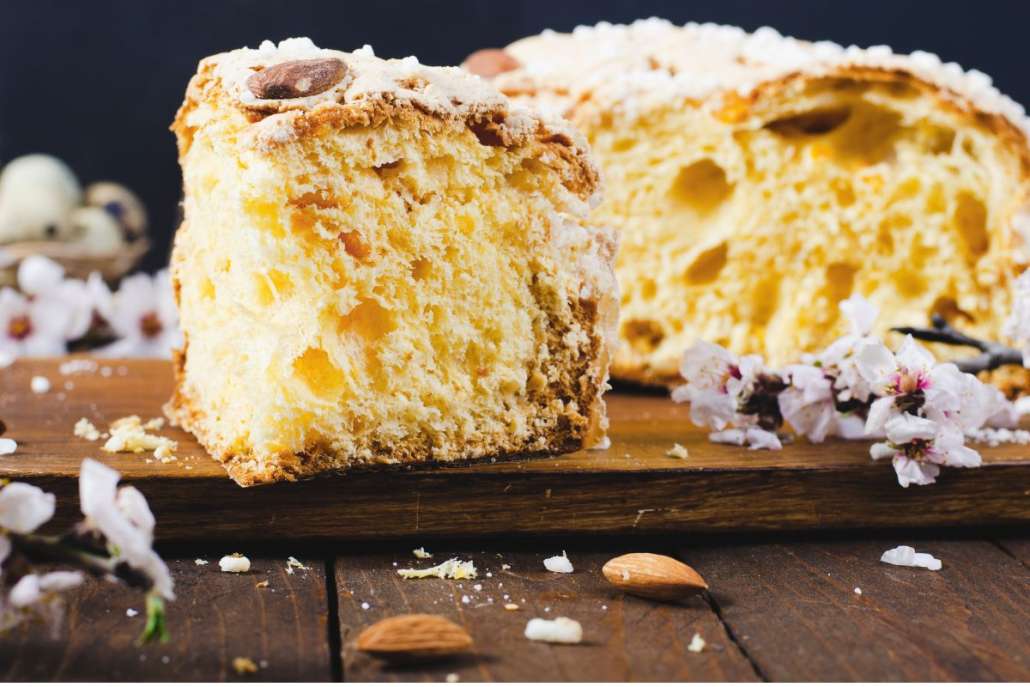
How do you recognize a high-quality Easter Colomba? First of all, it is important to pay attention to the ingredients. A good Colomba should contain butter, fresh eggs and candied fruit, avoiding preservatives and artificial additives. Secondly, the appearance is equally significant. Always check that the crust is golden and shiny, with a well-defined almond glaze. Furthermore, when cut, the crumb must be soft and moist, with good alveolation. Finally, the aroma and taste are fundamental. A quality Colomba has an inviting aroma and a balanced flavor, without being excessively sweet.
Let’s discover together the best Easter Colomba in Rome.
- Antico Forno Roscioli (Via dei Chiavari, 34) – Campo de’ Fiori
- Casa Manfredi (Viale Aventino, 91) – Aventino / Circo Massimo
- Cresci (Via Alcide De Gasperi, 11) – Prati / San Pietro
- Cristalli di Zucchero (Via di Valtellina, 34) – Monteverde Nuovo
- Dolcemascolo (Viale Giuseppe Mazzini, 84) – Prati
- Forno Conti (Via Giusti, 18) – Esquilino / Santa Maria Maggiore
- Il Cannolo Siciliano (Piazza Malatesta, 16) – Centocelle
- Le Levain (Via Luigi Santini, 22) – Trastevere
- Lievito, Pizza, Pane (Viale Europa, 339) – EUR
- Micro Forno Luca Pezzetta (Via G. Battista Grassi, 22) – La Rustica
- Pasticceria Ghimenti (Via Jenner, 83) – Monteverde Nuovo
- Pasticceria Grué (Viale Regina Margherita, 95) – Parioli
- Pasticceria Walter Musco Bompiani (Largo Benedetto Bompiani, 8) – Tor Marancia
- Regoli (Via dello Statuto, 60) – Esquilino / Termini
NOT IN ROME BUT IN ITALY? Solodamanduca (Aprilia, LT)