The Roman Artichoke Festival: the true heart of the Roman spring
There’s a precise moment when Rome changes its scent. It’s when the markets fill with shades of green and purple and the undisputed star becomes the , also known as “mammola.”
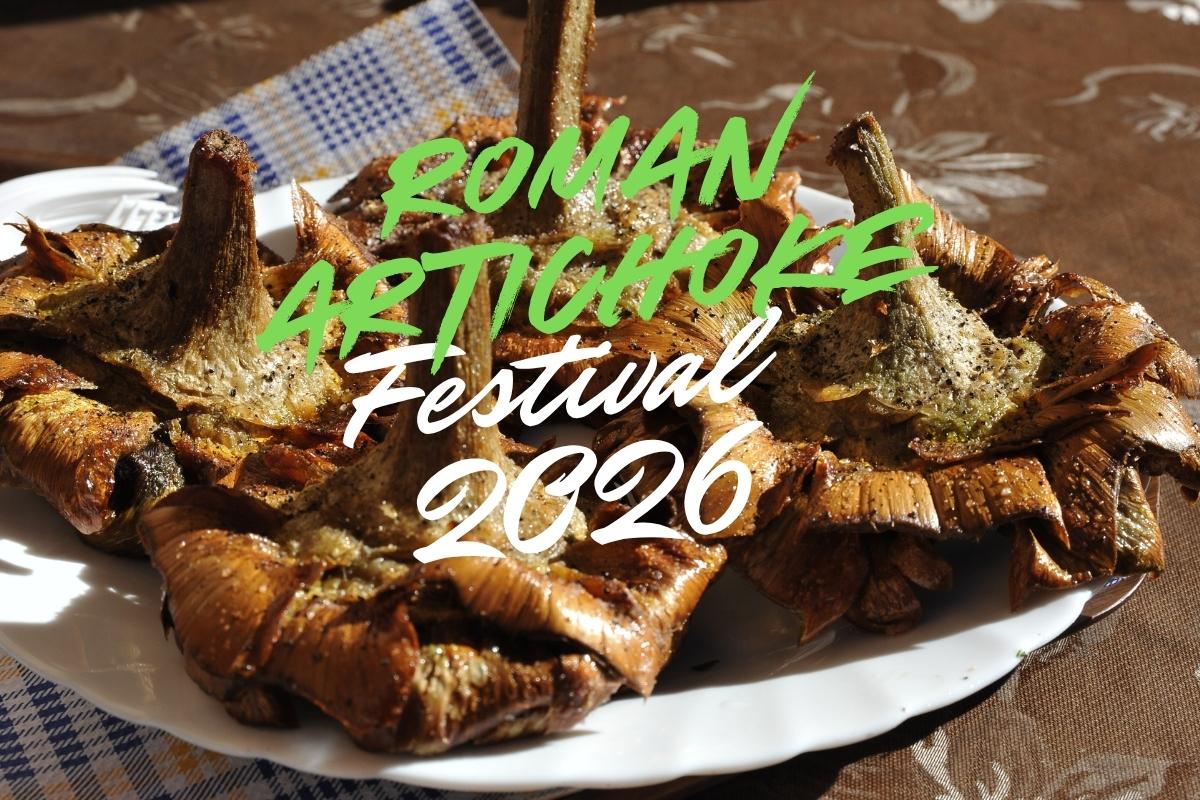
In 2026, this excellence will be celebrated again with the Roman Artichoke Festival at the Portico d’Ottavia, an event that unites tradition, gastronomic culture, and local identity in the most authentic heart of the city.

The artichoke festival: an experience to live & savor
The Roman Artichoke Festival is more than just a tasting: it’s a sensory journey through tradition and innovation. Chefs, producers, and institutions come together to showcase a product that speaks to the region better than any recipe book. Through street food, cooking demonstrations, and meetings, Rome celebrates one of its most authentic symbols. Reminding us that true cuisine always comes from simple… yet extraordinary ingredients.
 A tradition rooted in history
 A tradition rooted in history
The Roman artichoke isn’t just an ingredient: it’s a symbol. Grown primarily in the Lazio countryside, between Ladispoli, Cerveteri, and Sezze Romano, this vegetable is famous for:
- the rounded and compact shape
- the absence of thorns
- the delicate, almost sweet flavour
Already beloved in ancient Rome, the artichoke has become a staple of Roman-Jewish and peasant cuisine over the centuries. Becoming one of the city’s most recognizable dishes. Strolling through the Portico d’Ottavia during the festival is like immersing yourself in this history. Amidsting the aromas of fried food, family stories, and recipes passed down through the generations.
How to choose the perfect artichokes
 How to choose the perfect artichokes
If you really want to bring a piece of Rome home with you, you need to know how to choose your artichokes carefully. The best ones are:
Compact and firm → the leaves must be well closed
Heavy → an indicator of freshness
Uniform color → green with natural purple hues
Crisp stem → never dry or soft
“Screeching” sound → when rubbed the leaves must “creak”
Avoid those that are too open or have dark spots: they are already old.
Buying Artichokes in Roman Markets
 Buying Artichokes in Roman Markets
In Rome’s markets, you can find excellent artichokes, especially from the areas of Ladispoli and Sezze Romano. These areas are ideal for growing the Roman artichoke, which is protected by a dedicated consortium. In the days of the Festival, anyway there will be direct vendors from Coldiretti. A lovely occasion to buy good artichokes but, moreover, to talk with them.
A Very Fresh Option
To ensure a truly fresh product, why not buy artichokes directly from the producers? Coldiretti is committed to promoting these farmers. You can find their products at the wonderful San Teodoro market, open on weekends. Even during the Festival, in Portico d’Ottavia, the direct growers will be waiting for you with open arms. Why now? This is the best season for the romanesco.
Remember to consider the season: artichokes prefer cold temperatures and are consumed in the winter months.
The king of the table: how to cook the Roman artichoke
In Rome, the dilemma is present: Roman-style or Jewish-style?. This time, we’ll share our recipe version of the Roman-style artichoke. To learn how to prepare the Jewish-style version, come join our cooking class. From November to April, you’ll learn how to prepare artichokes the way grandma Italy commands!
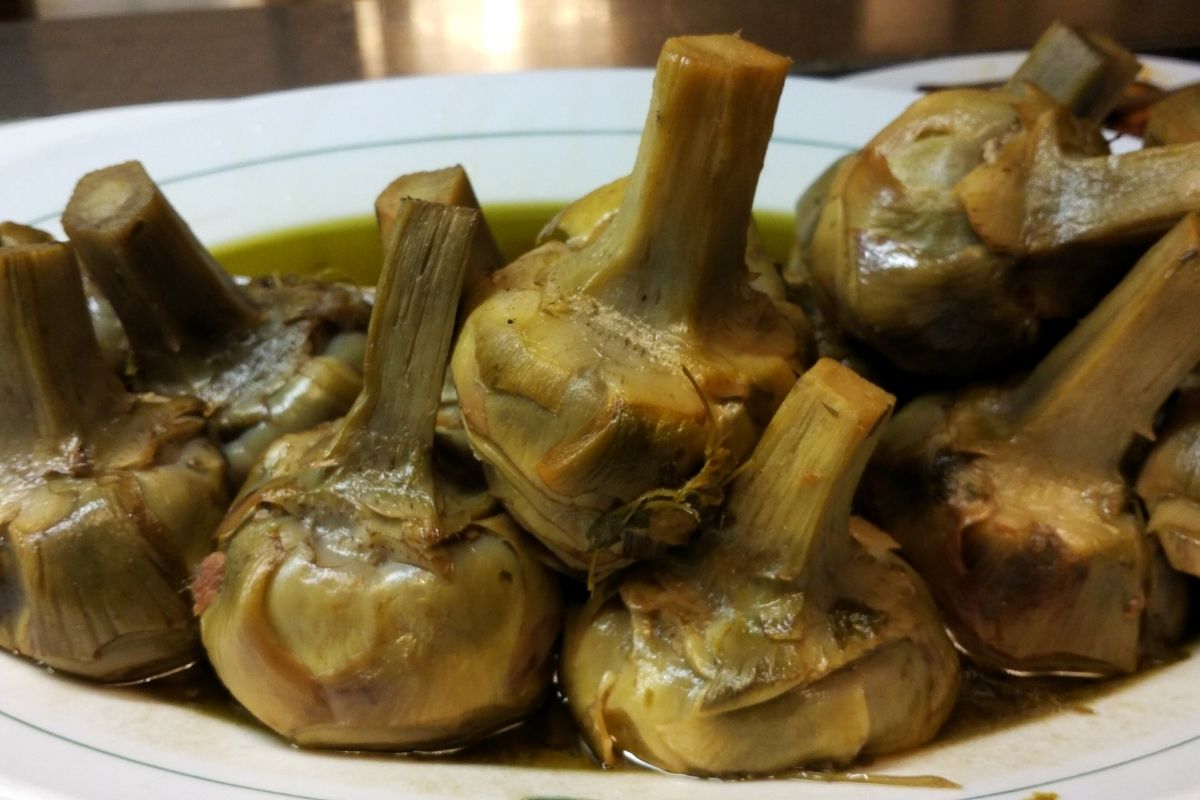
How to Prepare Roman-Style Artichokes: The Recipe
Ingredients for 4 people:
- 4 Roman artichokes
- garlic
- Roman mint
- parsley
- extra virgin olive oil
- salt and pepper
Procedure:
Clean the artichokes by removing the tougher outer leaves and spreading them out gently the heart. Prepare a mince with garlic, mint and parsley. Stuff the artichokes with the chopped mixture and season with salt and pepper. Place them upside down in a narrow pan. Add oil and a little water, then cook over low heat for about 30–40 minutes.
The result? Tender, fragrant, irresistible. Come try them at the Roman artichoke festival or in Rome’s most traditional restaurants. But strictly in season!