Who doesn’t love gnocchi? A dive into the history of Italian cuisine.
Each region has its own version. Among the many recipes, let’s discover together potato gnocchi and Roman gnocchi, today a comfort food.
Different gnocchi but same passion
Potato gnocchi and Roman-style gnocchi are like two distant cousins: same name, but very different personalities. The former are soft and delicate, perfect with a thousand sauces. The latter are firmer, reassuring, to be enjoyed slowly perhaps on a cold day, accompanied by a nice glass of red. Whether you are Team Potato or Team Semolino, one thing is certain: when we talk about gnocchi, we talk about home, tradition and flavors that never go out of style. And you, which do you prefer?

Gnocchi: A long and tasty story
Gnocchi seem to be made to pamper us on a bad day. But what is the story behind this deliciousness? It seems that gnocchi existed long before the arrival of potatoes in Europe. Already in ancient Rome, doughs were prepared with flour and water, perhaps with the addition of breadcrumbs or eggs. According to some sources, the term gnocco derives from the word knodill, that means knot. The name comes from the language of the Lombards, who occupied northern Italy for years. The Italianized word began to circulate in particular in the Emilia Romagna region starting from the year 1000. It was therefore a dish of pasta knots, not so different from those we know today, but precisely without potatoes.
The key ingredient of gnocchi: potatoes
It is precisely with potatoes that gnocchi make the leap in quality and become the dish that makes us dream today. But for this you will first have to go through a famine! In fact, only after the second half of the eighteenth century the first recipes using boiled potatoes begin to appear. Although already known for its gastronomic uses since the sixteenth century, after being imported from the Americas, it is only from that moment that it becomes the basic ingredient of popular cuisine. In fact, the shortage of food caused the price of cereals to rise and so potatoes become the new bread for the poorest. The potato begins to appear in the recipe books of the time as an addition to other dishes. Obviously also as an ingredient at the base of gnocchi. With egg yolks, cream, parsley, ricotta, butter or lard.

Gnocchi according to Artusi
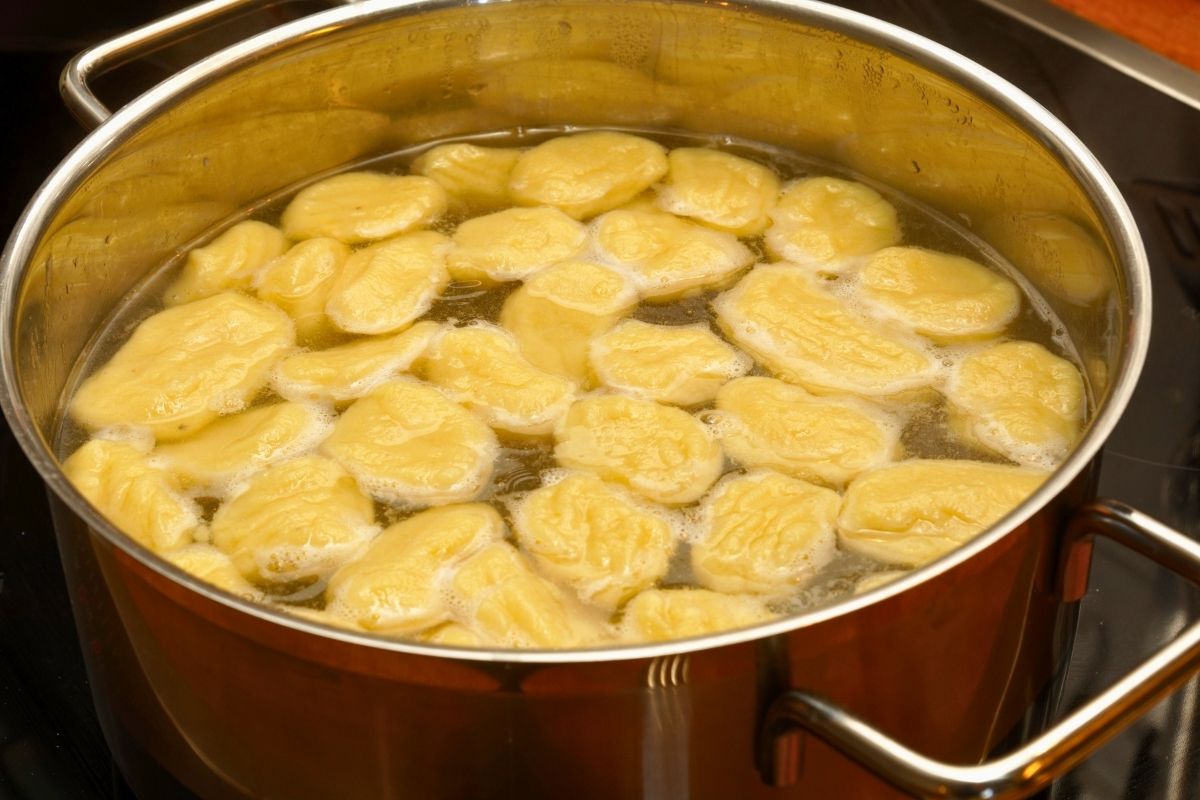
The father of Italian cuisine, Pellegrino Artusi, codified the recipe for gnocchi. In 1891 he wrote the recipe for two variations. The first is with boiled and mashed potatoes mixed with minced chicken breast, parmigiano, egg yolks, flour and nutmeg. The second is only with potatoes and flour. The golden rule? Don’t work the dough too much and use old potatoes (yes, the slightly wrinkled ones). Because they are drier and hold their shape better. Boil the potatoes with their skins on, mash them while still hot, add the flour and knead quickly and form little loaves to be cut into pieces and then cooked in boiling water. A dish that still reigns supreme on Italian tables today.
What about gnocchi alla romana? Those are something else!
Plot twist! Gnocchi alla romana are not as we imagine. They are not made with potatoes, they are not rolled up, they are not boiled. They are prepared with semolina, milk, butter, parmigiano cheese and eggs. The dough is spread out in a pan, cut into disks and baked with a generous sprinkling of parmigiano and flakes of butter. The result? A golden and fragrant pan, with gnocchi that are soft inside and crunchy outside. Gnocchi alla romana are a dish with controversial origins. Butter and parmigiano are certainly not typical ingredients of Lazio region. But rather of regions such as Piedmont. However, it is a typical dish of peasant cuisine from Lazio, prepared with a traditional poor ingredient, semolina. Even Ada Boni, in her book La Cucina Romana, refers to gnocchi alla romana as an ancient tradition to be safeguarded. The dish that the Romans enjoyed to celebrate something important.
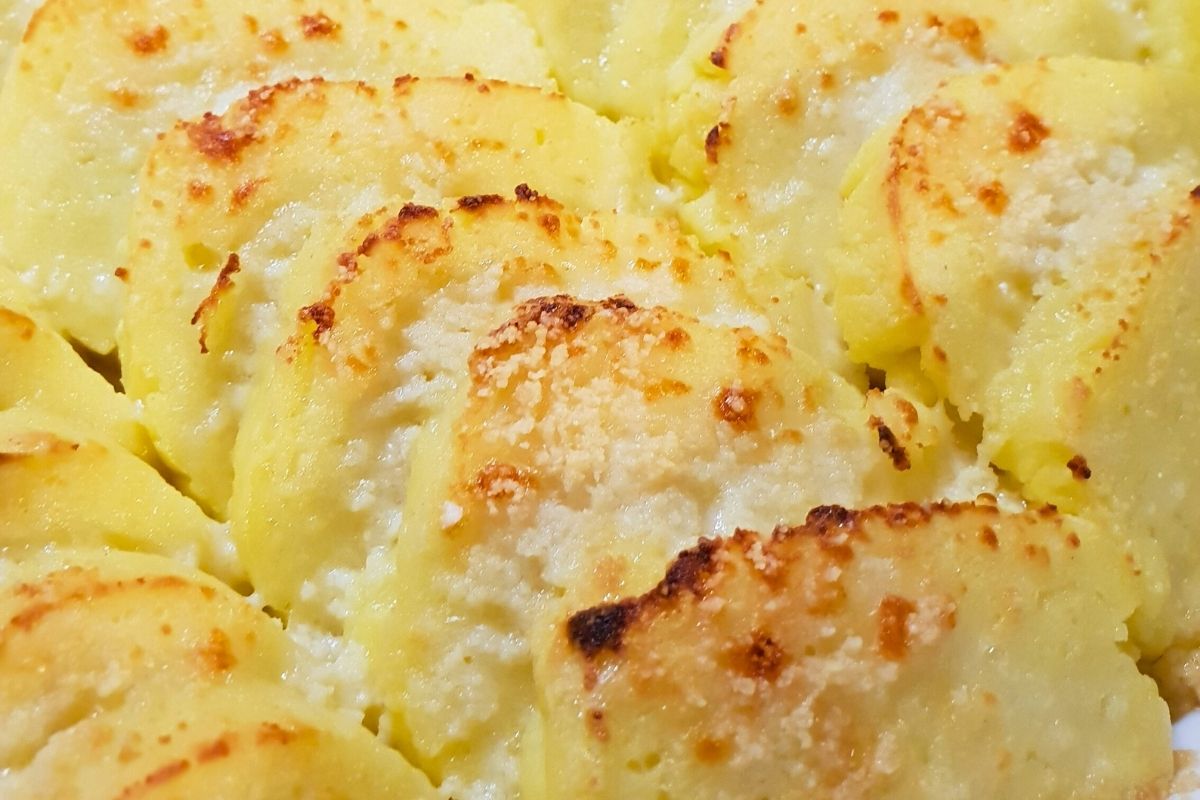
Rome and Thursday gnocchi!
And if you’ve ever been to Rome, you may have heard of Giovedì gnocchi, on Thursday it’s gnocchi. But where does this tradition come from? The full saying, in fact, is: Thursday gnocchi, Friday fish, Saturday tripe. It was a sort of gastronomic calendar of the popular Roman week. On Thursday, the day before Friday (which according to Catholic tradition is a lean day), Romans needed a richer and more substantial meal: gnocchi. This was how people stocked up before Friday’s penance. Even today, in Rome, many restaurants on Thursdays offer gnocchi on the daily menu. A habit that endures, because, let’s face it, gnocchi pleases everyone.
How about taking a trip to Rome and trying some typical specialties on one of our food tours?
Also, if you want to get our guide to the best restaurants in Italy, write to us!