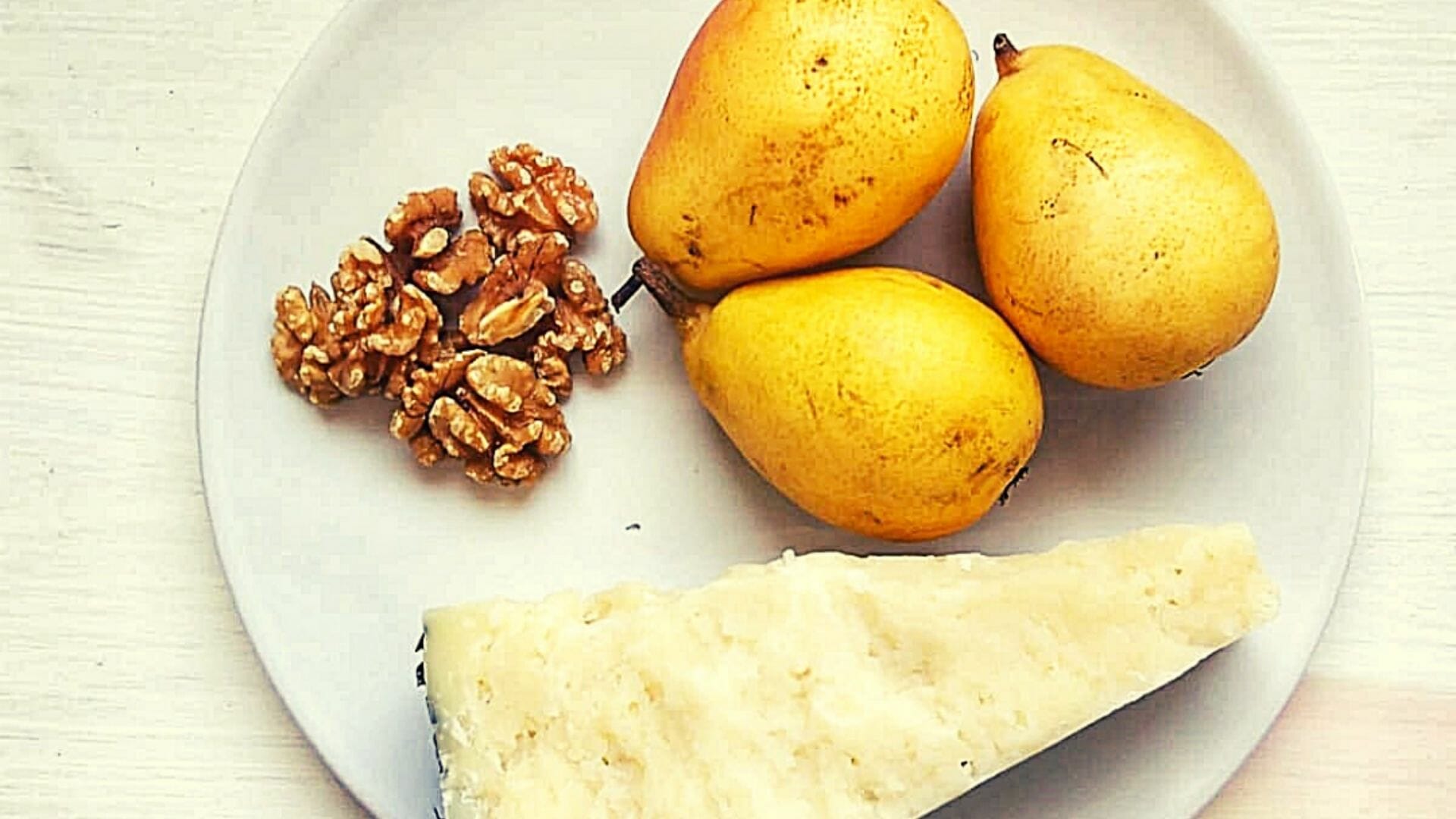
Cheese and Pears, an ancient combination of ingredients, popular all over Italy.
Cheeses and pears: a marriage of love.
A mix of ancient tastes, now also rediscovered by gourmets. Here the focus is to balance the two ingredients. Pears and cheese has been one of the best known food pairings for centuries. For many years it was the meal of shepherds and peasants to the point of coining the famous saying: “Don’t let the farmer know how good cheese is with pears”.
A crude food, unsuitable for the refined palates of the rich.
It was so for the Romans, it was even more so in medieval society, rigidly pyramidal. The consideration for fresh fruit was different, and in particular for pears, a food that is easily perishable and impossible to keep for a long time.
Anyway, the fate of the pears, was to reach the tables of the lords. Only in 1500 the cheese began to assert itself also on the tables of the nobles. The aristocracy discovered the taste of a food easy to make and preserve. They started to be offered at the end of a meal, together with fruit. A kind of dessert, indeed.
How to pair cheeses and pears.
There are many possible combinations with the different varieties of pears and the different types of cheeses.
The key aspect is to find the right combination of flavors and textures and a balanced dosage between these two ingredients. The Autumn and the Winter are the season for pears. Fruit markets offer many different kind of this tasty fruit, likewise the Williams, Coscia and Kaiser. The advantage of this fruit is that it will also be present on our tables for all the autumn and winter months.
Let’s play with combinations

The Williams pears go well with fresh goat and sheep cheeses, but also with hard Asiago cheese. The Coscia pears find their ideal combination with scamorza, fresh or semi-seasoned caciotta and caciocavallo. The Abate pears, are excellent to be enjoyed with all blue cheeses such as Gorgonzola. The Decane pears, for texture and flavor, are the variety to be preferred with Taleggio, spicy and seasoned provolone, but also Fiore Sardo. The Kaiser pears, indeed, are excellent with Pecorino, Parmigiano and Grana Padano.
What we’re going to drink with pear & cheese?
A glass of sweet wine is a perfect choice. Firstly consider the cheese, and follow the rules for the wine pairing. The pear will add acidity and freshness according to the type and ripeness.
How to pair cheese with wine
Each cheese will therefore have unique organoleptic characteristics. Characteristics that must be taken into account in the combination. There will be, therefore, an ideal wine for a plate of meats and cheeses. It is an ideal wine for cheese and fruit. In the first case, we will look for a contrast of flavors. Bearing in mind the intensity, aroma and persistence of taste of cheeses and cured meats. In the second case, therefore, the sugary components will change the cards on the table. In this case, to conclude, it is better to focus on a selection of sweet wines.
Some basic rules: useful but never to be taken literally
Soft cheeses, for example, can be better combined with medium-bodied white wines. Very aromatic, soft cheeses will require aromatic wines. Like Riesling, Traminer or Moscato. Do not underestimate the pairing with sparkling wines. Especially if they have intensity and complexity. Flowery rind cheeses, such as brie or camembert, will require medium-bodied whites or reds. Those with a semi-hard paste, such as Tuscan pecorino, or provolone go well with medium-bodied whites. Red wines of great structure and softness for aged cheeses. The blue wines are enhanced in the combination with sweet wines, or passito. As well as with soft Reds of great structure. In conclusion, with very soft aromatic whites.
Pairing tips:
Buffalo Mozzarella
Classic method sparkling wine, intense and complex, fresh and sapid. Like Champagne, Franciacorta, Oltrepò Pavese. Fiano di Avellino, Aglianico Rosato. Etna rosé, Lagrein South Tyrol.
Castelmagno in the fresh version
Red wine with tannins, well balanced. Barbaresco, Nebbiolo, Barbera, Brunello di Montalcino, Montefalco.
Seasoned Castelmagno
Sweet dessert wines. Passito di Pantelleria, Picolit, Sauternes
Fresh Tuscan pecorino cheese
Fresh and medium-bodied white and red wines. Refosco dal peduncolo rosso, Vernaccia di San Gimignano, Dolcetto d’Alba.
Caciocavallo
Wines of great body and softness. Aglianico, Cirò, Chianti Classico, Chardonnay
Parmigiano Reggiano
12 months aged: Spumante metodo classico, (Franciacorta, Trento DOC). Lambrusco, Vernaccia di San Gimignano.
Age 24 months: Sangiovese di Romagna, Chianti classico. Dolcetto d’Alba, Rossese di Dolceacqua.
36 months aged: Brunello di Montalcino, Barbera d’Asti, Primitivo. Montefalco red, Taurasi.
Grana Padano
up to 16 months: Chardonnay, Sauvignon Blanc, Traminer. Franciacorta, Oltrepò Pavese, Prosecco, Trento Doc.
from 16-20 months: Lambrusco, Etna Rosso, Pinot Noir, Lagrein.
over 20 months: Taurasi, Amarone della Valpolicella, Cabernet Sauvignon. Brunello di Montalcino.
Pecorino Romano cheese
Soft red wine. Rosso di Montalcino, Nero Buono di Cori, Cannonau, Cesanese del Piglio. Carignano del sulcis, Carmenere.
Aged Tuscan Pecorino
Red wine of great body and complexity. Barolo, Brunello, Chianti, Amarone.
Pecorino Sardo
Fresh or sweet red wine. Monica di Sardegna, Carignano del Sulcis, Barolo. Brunello, Malvasia di Bosa, Muffato dolce.
Blue cheeses
Gorgonzola
Wine of great body and enveloping, with aromatic complexity. Amarone, Barbera d’asti, Pinot noir, Ghemme. Bramaterra. Chardonnay. Picolit, Sauternes, Sweet, Gewürztraminer.